TL;DR - Nvidia invested $3.5B in MediaTek convertible bonds, not equity — no shares, no board seat today - Alphabet (GOOGL) also participated in the same bond offering as a minority buyer - Conversion price is NT$4,513.75 — 15% above the reference close (NT$3,925), approximately 16.8% above the pricing-day close — full conversion would give Nvidia ~1.5% of MediaTek - The deal is a NVLink Fusion standards play: Nvidia wants custom chips from its partners to run on its interconnect architecture - MediaTek has been involved in developing AI accelerators for Google — meaning Alphabet and Nvidia co-funded the same balance sheet on the same day
Nvidia's $3.5 billion is not a stake in MediaTek. It is a bond. The Taiwanese chip designer sold convertible notes on Monday, Nvidia bought the overwhelming majority of them, and Alphabet took a slice alongside. Nvidia receives no shares today, no board seat and no vote.
That distinction was missing from most of the day's headlines. It changes what the money means.
What the $3.5 billion actually is
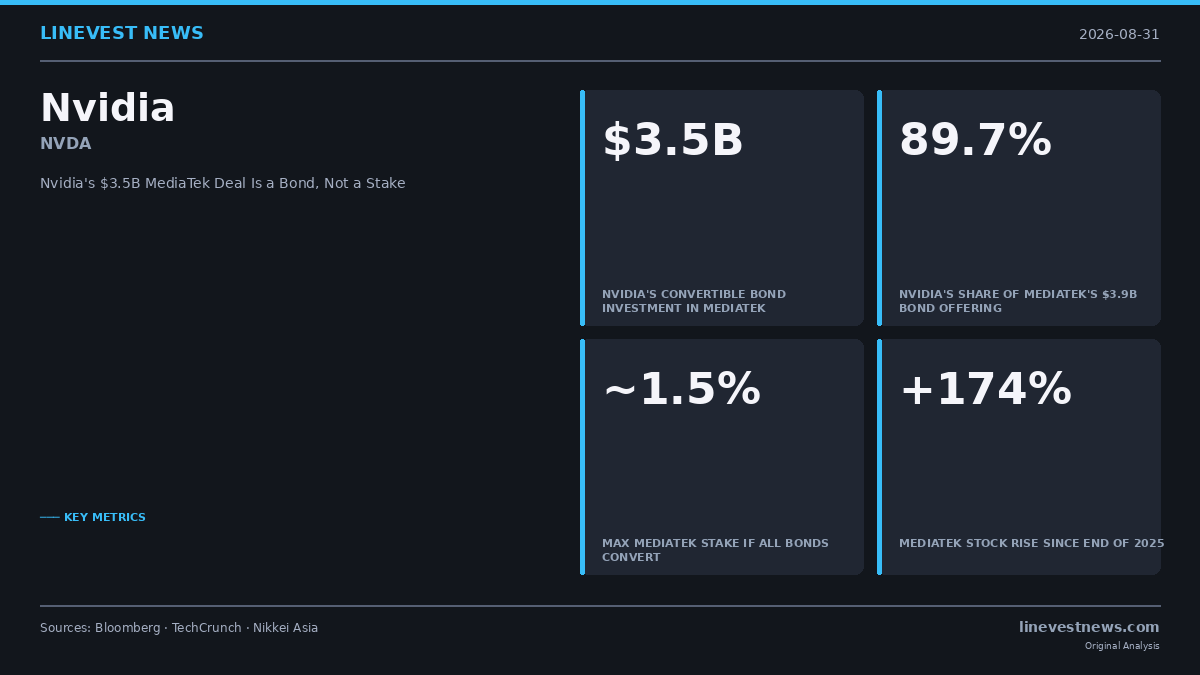
MediaTek (TWSE: 2454), the Taiwanese fabless chip designer best known for smartphone processors, priced $3.9 billion of overseas convertible bonds on Monday, Bloomberg reported. Nvidia (NASDAQ: NVDA) took $3.5 billion of it. That is 89.7% of the entire deal. Nvidia did not join the book. It was the book.
Alphabet (NASDAQ: GOOGL) took part as well, though its share of the $400 million balance was not disclosed. MediaTek describes the issue as the largest overseas convertible bond ever sold in Taiwan's capital market, according to its pricing disclosure as reported by Digitimes.
The terms sit in that disclosure rather than in either buyer's announcement. The bonds pay no interest and run five years. They settle on Sept. 8 and list on the Singapore Exchange.
The conversion price is NT$4,513.75. MediaTek's disclosure sets that at 115% of NT$3,925 — the reference close used to price the bond, established before pricing day. On pricing day itself, MediaTek shares fell 1.5% to close at NT$3,866.
Several accounts of the deal called that a "115% premium." It is not. A price set at 115% of a reference close carries a premium of 15% over that reference. Against pricing day's actual close of NT$3,866, the effective premium is closer to 16.8%.
The difference is not pedantry. It sets how far the stock has to move before Nvidia's bonds become shares at all. Under the correct reading that threshold is modest and reachable within the bond's life. Under the reported one — where the price itself is set at 2.15× market — the stock would have to more than double to reach conversion. Those are two very different descriptions of how much equity Nvidia is really reaching for.
Why It Matters
The instrument is the story. A bond and a stake buy very different things, and the gap between them is where this deal actually lives. A stake makes an owner. A bond makes a creditor holding an option, and an option can be left unexercised.
That choice says what Nvidia was shopping for. It did not want a seat at MediaTek's table. It wanted MediaTek's designs to speak Nvidia's language. And it was willing to hand over the cash to make that happen without ever asking for the shares.
Read the deal as a stake and it looks like consolidation. The largest chip designer in the world would be quietly gathering a rival under its wing. Read it as a bond and it looks narrower, and more interesting. It becomes a standards play, paid for in cash, with the ownership question deliberately left open.
Every claim that follows rests on that reading. Watch which way the evidence cuts.
Why a bond and not shares
A zero-coupon convertible bond is a loan that pays no interest along the way. On a zero-coupon bond, there is no periodic interest; the holder receives principal at maturity or can swap the bond for shares if the stock clears the conversion price before then. For a strategic investor that structure is a choice, not a compromise. It hands a partner the cash it needs without taking an ownership position that antitrust regulators would want to examine.
Convert it anyway and the ceiling comes into view. Trading Economics quoted 31.685 New Taiwan dollars to the U.S. dollar on Aug. 31, the pricing date. At that rate Nvidia's money is worth roughly NT$110.9 billion.
Divide by the conversion price and it buys about 24.6 million shares. MediaTek has 1.60 billion shares outstanding, per stockanalysis.com. Nvidia's largest possible future holding is therefore around 1.5%.
MediaTek's own disclosure corroborates that arithmetic. The company estimates that full conversion of the whole issue would dilute existing holders — cut their share of the company — by at most about 1.67%. Nvidia holds roughly nine-tenths of the issue.
The consideration is not financial
So Nvidia is not buying ownership. It is buying adoption.
NVLink is Nvidia's high-speed connection between chips. NVLink Fusion is the version Nvidia opens to outsiders. It supplies other designers with ready-made NVLink chiplet interfaces and SerDes IP, so that a chip Nvidia did not design can still slot into an Nvidia rack, TechCrunch reported. MediaTek will offer that to its own custom-chip customers.
The two firms also extended their work on processors for personal computers and on platforms for AI in vehicles, per Investing.com. Those are real product lines. They are not what $3.5 billion is for.
The customer on the other side of the table
Here the deal stops looking simple. MediaTek is not a neutral supplier. It is one of the design partners building Google's own AI accelerators — the closest thing the market has to a working alternative to buying Nvidia.
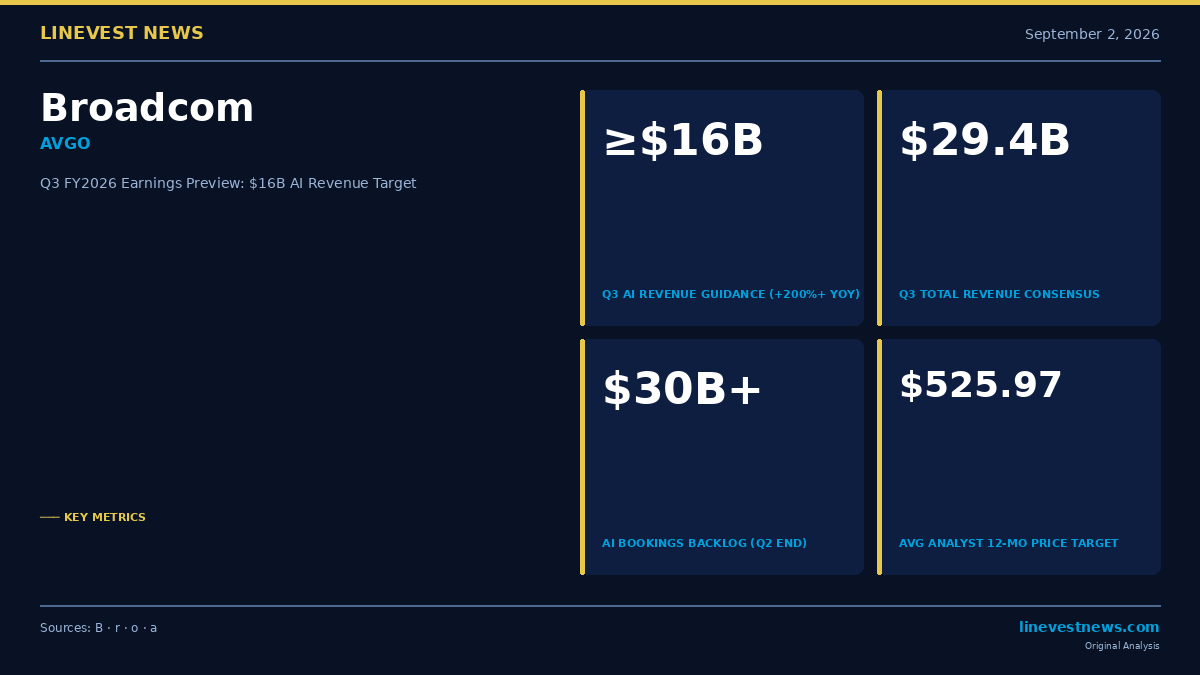
Google's AI accelerator program has used Broadcom (NASDAQ: AVGO) as its primary custom-silicon partner. Reporting from The Next Web describes the workload split between training and inference — the cheaper, higher-volume work of running a model that has already been trained. TrendForce reports that Marvell and AMD are now challenging Broadcom and MediaTek's positions in Google's next-generation AI accelerator program, suggesting that competitive alignment is still in flux.
So on Monday, Alphabet and Nvidia funded the same balance sheet on the same day. One is paying for chips that reduce its Nvidia purchases. The other is paying to make sure those chips still land inside Nvidia's plumbing.
That is the strategy in a sentence. Nvidia is not trying to stop custom silicon. It is trying to make custom silicon depend on Nvidia's interconnect.
What it costs Nvidia
Against Nvidia's balance sheet the sum is small. Its most recent 10-Q, the quarterly report filed with the SEC, covers the period ended in late July. It shows $22.4 billion of cash and $34.1 billion of marketable debt securities.
Those two lines alone put $56.5 billion in cash and marketable bonds within quick reach.
The same filing carries $47.9 billion of non-marketable equity securities — stakes in private companies that cannot be sold on an exchange. It also lists roughly $25 billion of equity investment commitments still to be funded, $18 billion of that in the remainder of this fiscal year. In that context, $3.5 billion represents a single item in a sustained, multi-quarter investment program.
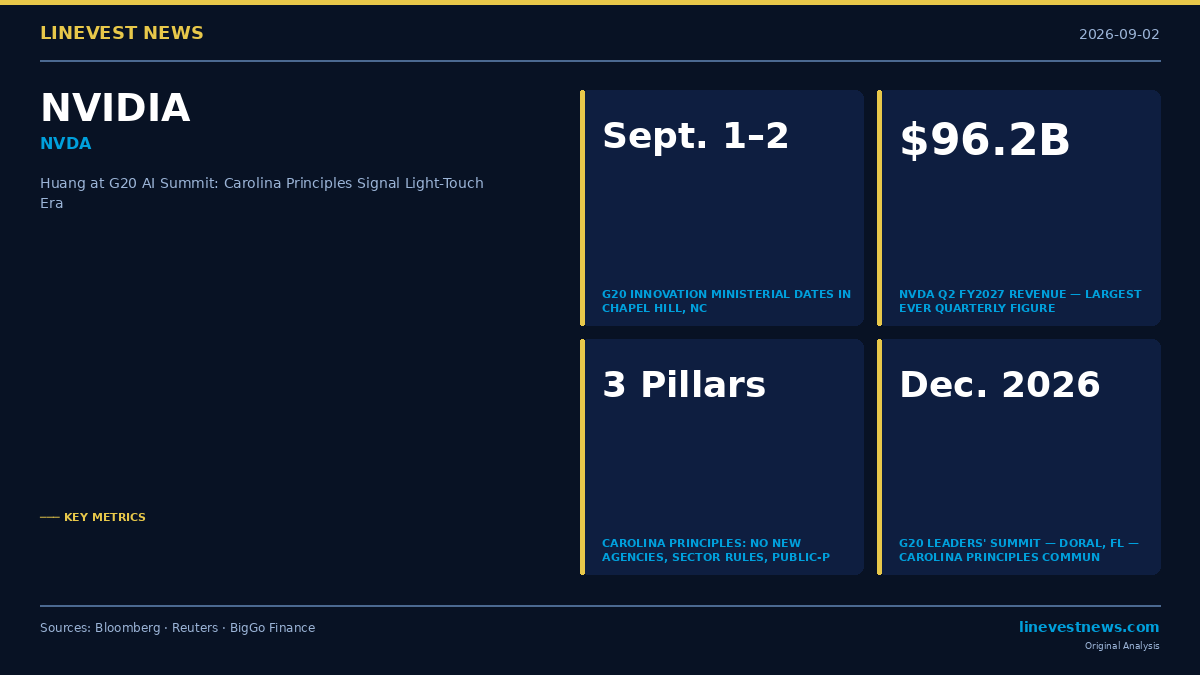
For scale, $3.5 billion is 3.6% of the $96.22 billion in revenue Nvidia reported for Q2 FY2027, the quarter ending late July 2026.
A recent template, and how this one differs
Nvidia agreed in September 2025 to buy $5 billion of Intel (NASDAQ: INTC) common stock, CNBC reported. That purchase closed in late December 2025, per Tom's Hardware.
CNBC reported that Nvidia acquired the shares under a September 2025 agreement. Tom's Hardware reported that the purchase closed only after clearance from the U.S. Federal Trade Commission, the American antitrust and consumer-protection agency.
Equity took roughly three to four months and a regulatory review. The bond structure defers antitrust scrutiny: any HSR or foreign-investment filing would be triggered at conversion, when Nvidia acquires shares, not at the bond purchase itself. Nvidia has now used each of these structures with companies it competes with, and it chose the slower, equity-based route only when it actually wanted the shares.
What our archive shows
LineVest wrote on Aug. 26 that Nvidia's April-quarter filing showed $18.6 billion of private-company stake buying in one quarter, with $27 billion more committed.
The July-quarter filing puts the non-marketable balance at $47.9 billion and remaining commitments near $25 billion. Two days after that piece, LineVest covered reported talks to acquire Hugging Face outright for $12.9 billion.
Three different instruments across five days: reported acquisition talks for Hugging Face, existing equity stakes in private companies, and now a convertible bond. The structure keeps changing. The purpose does not.
The circularity question
It came up immediately, and Nvidia answered it. "This is not circular because obviously they do their own business and we do our own business," chief executive Jensen Huang said, in comments carried by Investing.com.
Portfolio manager Joe Tigay offered the other reading in the same report: "Nvidia financing MediaTek so MediaTek can develop products that extend Nvidia's architecture."
The bond structure is itself a partial answer. Nvidia's money is not revenue to MediaTek. It is debt that MediaTek must repay unless Nvidia elects to convert, and MediaTek said the proceeds go toward foreign-currency material purchases. That is a weaker loop than a customer prepayment. The MediaTek bond follows a pattern of Nvidia deploying capital across the semiconductor supply chain.
What would make this reading wrong
The counter-case is straightforward. If MediaTek's data-centre business ends up dominated by the Google inference chip, which does not run on NVLink, then Nvidia has financed a supplier it cannot steer. On that reading the money bought optionality and a press release rather than a moat.
MediaTek's data-centre revenue is expected to top $2 billion in 2026, TechCrunch reported. Trailing revenue is NT$593.62 billion, or about $18.7 billion at Monday's rate, per stockanalysis.com. At that forecast rate, data centre would represent roughly a tenth of MediaTek's trailing annual revenue.
Two checkpoints will settle the argument. MediaTek says its first custom AI chip built for a single customer's workload enters mass production in the fourth quarter. Whose chip that turns out to be will say more than anything announced on Monday.
The second is Nvidia's next quarterly filing. Convertible bonds are debt securities, not equity. Where the $3.5 billion lands on that balance sheet will show how Nvidia itself classifies the position.
Monday's price action
The market's immediate verdict was muted. MediaTek shares fell 1.5%, per Investing.com. Nvidia's stock closed slightly higher on the day.
MediaTek's market value, based on the close after Monday's 1.5% decline (NT$3,866 per share on 1.60 billion shares), stands at approximately NT$6.19 trillion, or roughly $195 billion at Monday's rate. That figure has risen 174% since the end of 2025, per stockanalysis.com.
So Nvidia set its conversion price above a company whose shares have risen 174% since the end of 2025. That tells you something about the order in which this deal was negotiated. The financing terms follow the re-rating rather than anticipating it, and the partnership was the thing being bought.
Sources
- Bloomberg: Nvidia to Invest $3.5 Billion in Chipmaker MediaTek — original report on the deal
- TechCrunch: Nvidia's $3.5B MediaTek bet reveals its plan for tackling Big Tech's AI chip buildout
- Investing.com: Nvidia invests $3.5 billion in MediaTek convertible bonds
- Nikkei Asia: Nvidia invests $3.5 billion in MediaTek convertible bonds
- CNBC: Nvidia finalizes Intel stake (Dec. 2025)
- Tom's Hardware: Nvidia-Intel deal closes after FTC clearance
- The Next Web: Google inference chips, Nvidia challenge
- TrendForce: Marvell, AMD shake up Google TPU race
- Digitimes: MediaTek-Nvidia silicon financing, Taiwan
- Stockanalysis.com: MediaTek (TWSE: 2454)
- Trading Economics: Taiwan dollar
Disclaimer: LineVest is an independent news publication. This article is journalism, not investment advice. LineVest is not a registered investment adviser and does not recommend the purchase or sale of any security. Figures are attributed to their sources as of Aug. 31, 2026.