Verizon Dominates FCC Spectrum Auction; Samsung's 5G Network Equipment Unit Draws Investor Attention
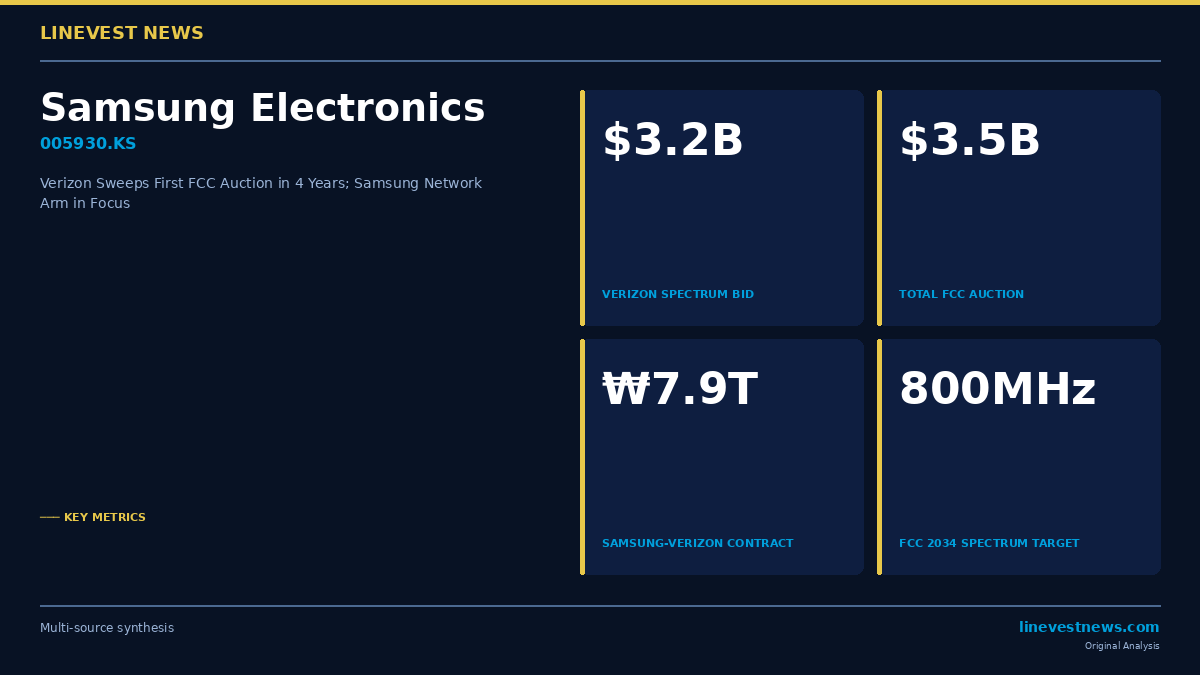
Verizon Wireless committed USD 3.2 billion — roughly 91% of the USD 3.5 billion total — in the United States Federal Communications Commission (FCC) AWS-3 spectrum auction that concluded this week, the first federal spectrum sale in four years. T-Mobile spent USD 278 million, AT&T USD 121 million, and SpaceX USD 8.5 million. The auction covered 65MHz of mid-band capacity and was the inaugural sale under the One Big Beautiful Bill Act (OBBBA), which restored the FCC's auction authority through 2034.
The lopsided outcome immediately drew attention in Seoul. Samsung Electronics (005930.KS) is Verizon's primary 5G network-equipment partner: in 2020 the two companies signed a ₩7.9 trillion (approximately USD 6.2 billion) supply contract for 5G base stations, one of the largest telecom deals in Samsung's history. Analysts note that when Verizon wins spectrum, hardware upgrades and base-station densification typically follow.
"Opening the first chapter of an 800MHz spectrum marathon" is how Hana Securities analyst Kim Hong-sik characterised the auction. He added that Samsung stands to benefit further from new US regulations barring spectrum licensees from deploying Chinese-made components in their networks. The rule, effective from 2025, effectively excludes Huawei-linked radio equipment, raising the probability that Samsung will be confirmed as Verizon's preferred vendor for the next investment cycle.
Policy Tailwind for Korean Telecom Suppliers
The OBBBA commits the FCC to auctioning 800MHz of spectrum in total by 2034, with an "upper C-band" nationwide sale slated as the next major event. The Congressional Budget Office projects the full programme will generate more than USD 85 billion in government proceeds — pointing to a decade-long runway of network infrastructure spending across the US market.
The ripple effects could extend beyond Samsung's own income statement. South Korea's telecom component supply chain is heavily weighted toward Samsung contracts: KMW (케이엠더블유) and RFHIC are the principal domestic vendors supplying antenna and power-amplifier components. Analysts say both companies may secure incremental orders from Ericsson and Nokia as carriers broaden their de-Chinafication efforts.
Verizon CEO Dan Schulman had flagged a lower 2025 capital expenditure budget of USD 16 billion, raising concerns that the carrier might step back from the auction. Its aggressive bid — accounting for nine-tenths of total proceeds — defied those expectations and suggests Verizon remains committed to 5G leadership ahead of the bigger C-band sale.
Samsung Network Business: A Quiet but Durable Contributor
Samsung's semiconductor and display segments have commanded most of the investor narrative in 2026, while the network business unit has operated in relative obscurity. A sustained US spectrum build-out — the FCC has authority to run auctions for another nine years — could restore the division to a more prominent earnings contributor.
The company declined to comment on bidding expectations or contract renewal timelines ahead of Verizon's next formal capex disclosure.
Sources: Chosunbiz — FCC Auction & Samsung Network · Chosunbiz — Yeongnam Mega Investment