
星巴克SBUX
關於星巴克
星巴克公司(Starbucks Corporation)經營全球規模最大的精品咖啡零售連鎖體系,透過逾三萬家門市銷售手工調製義式濃縮咖啡飲品、沖煮咖啡、Teavana品牌茶飲、氣泡飲及定期更換的餐食品項。營收來源分為直營門市與授權門市兩大渠道——直營門市貢獻絕大部分的銷售額與利潤,規模較小但利潤率更高的授權門市渠道則由合作夥伴在機場、連鎖超市及飯店內獨立經營。第三條收入來源為「通路發展」(Channel Development),涵蓋透過與雀巢(Nestlé)合作的「全球咖啡聯盟」銷售的包裝咖啡、單杯K-Cup咖啡膠囊及即飲飲料。北美直營門市通常貢獻各分部利潤的大宗,而以中國市場為首的國際業務則構成主要的成長動能。
長期投資人密切追蹤同店銷售的組成結構——即客流量與客單價的拆分比例——藉此判斷成長動力究竟來自客流增加,抑或是提價與產品組合升級。中國市場的曝險是結構性議題,需綜合考量地緣政治風險、瑞幸咖啡(Luckin)及庫迪咖啡(Cotti)等本土競爭者的挑戰,以及消費者情緒的波動。美國直營門市的工會組建浪潮及其引發的集體談判與全國勞資關係委員會(NLRB)程序,使勞資關係受到高度矚目。行動應用程式及Rewards獎勵計畫的用戶黏著度,因其鎖定大量消費交易及儲值卡餘額,作為自有渠道備受關注。資本配置歷來側重股息發放與股票回購,並輔以門市擴張;阿拉比卡咖啡豆與乳製品的大宗商品敞口,則主導著毛利率的週期性走勢。
星巴克於1971年在西雅圖派克市場(Pike Place Market)以全豆咖啡零售商身份創立,1982年霍華德·舒茨(Howard Schultz)加入後赴義大利米蘭考察,力主向義式濃縮咖啡吧模式轉型,並於1987年收購該連鎖品牌,1992年在納斯達克(Nasdaq)掛牌上市,公司面貌從此徹底改變。此後數十年間,星巴克積極拓展國內外版圖,先後於1999年收購Tazo、2011年收購Evolution Fresh、2012年完成Teavana收購,並於2018年與雀巢簽訂消費包裝商品全球授權協議。公司於2017年收回中國華東業務的全額股權,總部至今仍設於西雅圖。
就收入機制而言,營收逐筆累積自門市櫃台及得來速交易,並有日益增長的比重透過行動點餐付款及外送合作渠道貢獻;授權合作夥伴繳付權利金及商品銷售款項,雀巢則就行銷星巴克品牌包裝商品的永久授權支付費用。公司競爭優勢奠基於品牌資產、門市選址密度、Rewards忠誠生態系統、縱向整合的烘焙與供應鏈,以及一貫的門市體驗。主要競爭對手包括美國的Dunkin'及獨立第三波精品烘焙商、歐洲的Costa及JAB旗下連鎖品牌,以及在中國快速崛起的平價咖啡連鎖。美洲分部貢獻合併營收的主要部分,以中國為核心的國際業務則構成第二支柱。
公司簡介由LineVest編輯部撰寫。屬新聞報導,非投資建議。
委託撰寫星巴克的SEC完整報告 →星巴克相關報導
2篇文章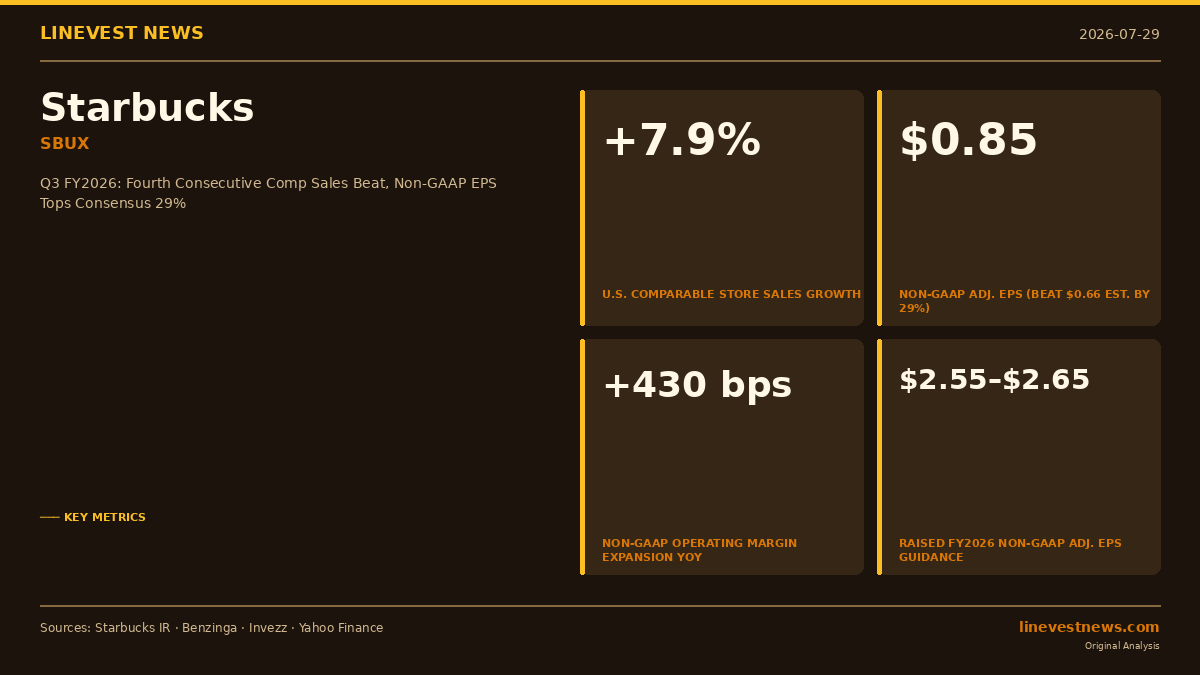
星巴克(SBUX)2026財年第三季:同店銷售額+7.9%,調整後每股盈餘超預期29%,Niccol上調全年展望
星巴克2026財年第三季(截至6月28日):美國同店銷售額+7.9%,非GAAP每股盈餘0.85美元超越市場預期0.66美元達29%,非GAAP利潤率提升430個基點;Niccol將2026財年每股盈餘指引上調至2.55至2.65美元。
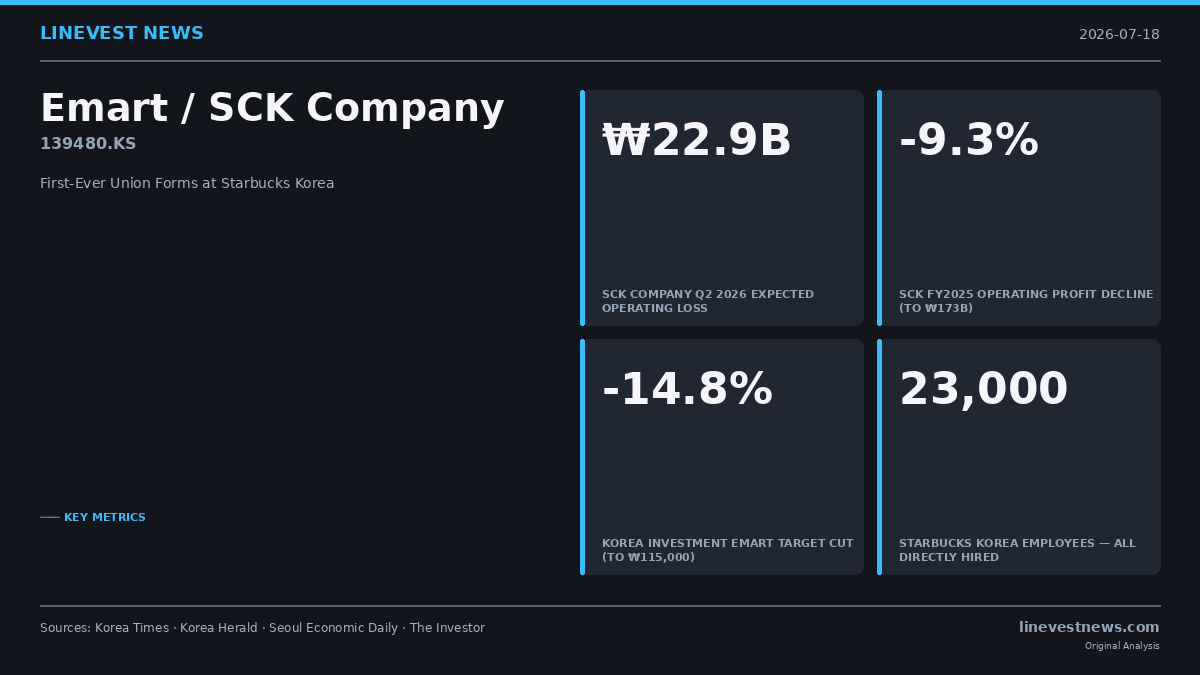
Starbucks Korea's First Union Forms as Q2 Operating Loss Looms — Emart (139480.KS) Faces Compounding Risk
Korea's first coffee-chain union forms at Starbucks Korea as Q2 2026 brings an expected ₩22.9B operating loss — a dual shock for Emart (139480.KS), which owns 67.5% of SCK.
深入標題背後
您剛讀到發生了什麼。接下來,讀懂它意味著什麼。
每天早晨送上當日分析報告 — 免費
LineVest Daily在開盤前送達您的信箱:當日發布的企業分析報告 — 最新10-K與10-Q真正揭示的數字,以簡明英文呈現。免費,無需信用卡。
同樣的報告,換成您指定的公司
為您關注的公司取得同樣深入的分析。將所選申報的財務細節與管理層決策、產業變化及影響未來業務的條件連結。英文PDF於3小時內寄至信箱。
要為您閱讀哪一家公司?
$15 · 單次 · 3 小時內 PDF
請先選擇公司基於SEC原始披露的獨立新聞報導 — 非投資建議。與任何券商無關。