
英特爾INTC
關於英特爾
英特爾公司(Intel Corporation)設計並製造半導體,歷史上以面向個人電腦與伺服器的x86中央處理器為核心業務。其財務報告分為「客戶端運算」(Client Computing)與「資料中心暨人工智慧」(Data Center and AI)兩大部門:前者向個人電腦原始設備製造商銷售CPU及相關晶片,後者則向超大規模雲端業者及企業客戶供應Xeon伺服器處理器、加速器及網路晶片。此外,英特爾旗下尚有涵蓋網路與邊緣晶片的業務單元、透過Altera從事的可程式化邏輯業務,以及透過Mobileye從事的自動駕駛業務——英特爾在Mobileye部分上市後仍持有其多數股權。獨立的Intel Foundry部門負責報告製造業務,服務對象涵蓋內部產品事業群及外部客戶。傳統上,個人電腦客戶端業務貢獻了英特爾的大部分營收,而資料中心業務歷來貢獻了佔比更高的利潤。
投資人持續關注若干使英特爾有別於無廠(fabless)同業的結構性議題。英特爾是少數仍在頂尖製程節點上從事整合元件製造(IDM)的企業之一,因此資本密集度、折舊費用及工廠產能利用率,均是毛利分析的核心焦點。內部製程路線圖的進展、晶圓代工部門爭取外部客戶的成效,以及內部生產與委外代工之間的比例分配,均受市場密切追蹤。此外,對少數個人電腦及伺服器主要客戶的集中依賴、美國及盟友對中國先進晶片出口管制的風險敞口、美國《晶片法案》(CHIPS Act)及歐洲類似計畫的補貼流向、股息政策,以及Altera與Mobileye股權的分拆進度,均是市場周期性關注的重點議題。
英特爾由羅伯特·諾伊斯(Robert Noyce)與高登·摩爾(Gordon Moore)於1968年在加利福尼亞州山景城(Mountain View)創立,最初生產記憶體晶片,後轉型為微處理器製造商。1981年,英特爾的8088處理器獲選搭載於IBM個人電腦,加之此後與微軟(Microsoft)形成的「Wintel」聯盟,使x86架構數十年間主導了個人電腦運算領域。此後重要里程碑包括:2015年收購可程式化邏輯晶片製造商Altera、2017年收購Mobileye、2022年Mobileye於納斯達克(Nasdaq)重新上市,以及目前仍在推進的Altera獨立分拆計畫。2021年,英特爾宣布策略調整,將產品業務與內部晶圓代工業務拆分,後者亦向外部客戶提供晶圓製造服務。
英特爾的晶片產品主要銷售對象包括:戴爾(Dell)、惠普(HP)、聯想(Lenovo)及超微電腦(Supermicro)等電腦與伺服器原始設備製造商、超大規模雲端業者、通訊及工業客戶,以及日益增多的外部晶圓代工客戶。在銷售管道上,大型客戶採直接合作模式,長尾客戶則透過經銷商覆蓋,通常以多季度預測為基礎,而非簽訂長期照單全收(take-or-pay)合約。英特爾的競爭優勢根植於製造製程的領先地位、根深蒂固的x86軟體生態系,以及橫跨客戶端至資料中心的完整平台布局。其主要競爭對手包括:x86 CPU領域的AMD、資料中心加速器領域的Nvidia、晶圓代工服務領域的台積電(TSMC)與三星(Samsung),以及在客戶端與伺服器插槽市場競逐的Arm架構設計商。英特爾大部分營收來自美國以外市場,對亞太地區客戶具有相當程度的風險敞口。
公司簡介由LineVest編輯部撰寫。屬新聞報導,非投資建議。
委託撰寫英特爾的SEC完整報告 →英特爾相關報導
3篇文章
桑德斯《AI超級智能禁止法》:MSFT、AMZN、GOOGL投資人須關注的三大重點
桑德斯參議員提出禁止超級人工智能、暫停前沿AI開發的法案,矛頭指向微軟、亞馬遜與Alphabet——即便國會未能推進,政策風險已然成形。
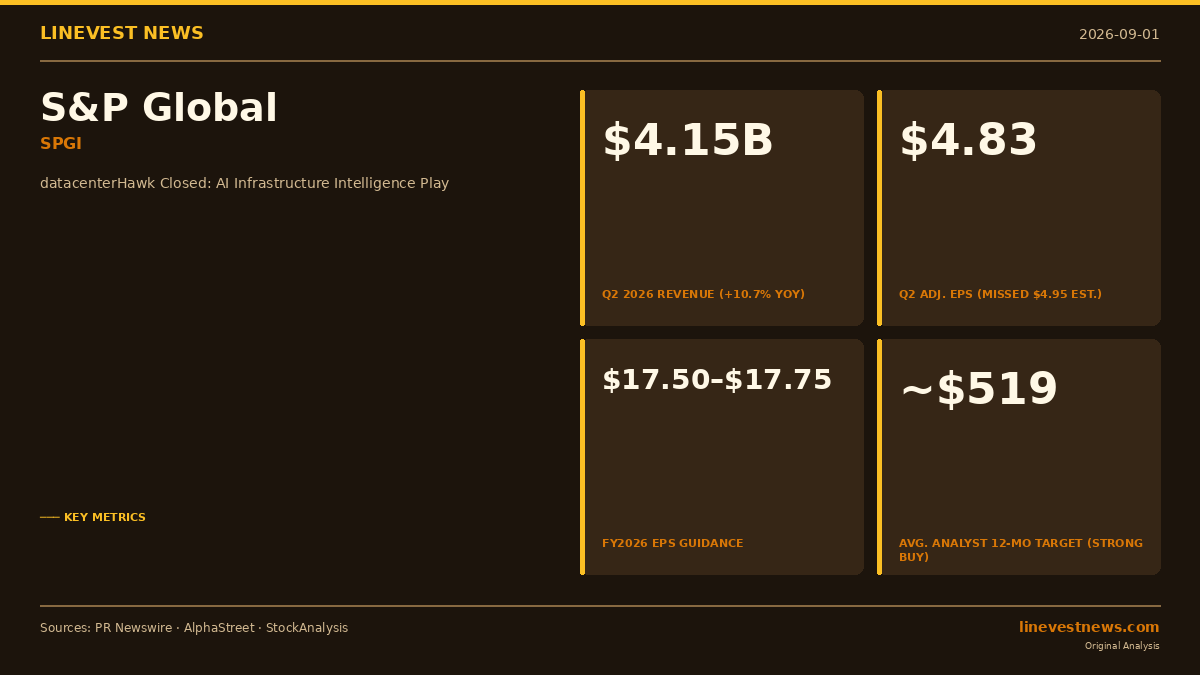
標普全球完成收購datacenterHawk——SPGI人工智慧基礎設施情報布局解析
標普全球於9月1日完成收購datacenterHawk,將數據中心與光纖情報能力納入標普全球能源部門。交易條款未予披露,對近期盈利影響甚微。
英特爾 (INTC) 2026年第二季:營收增25.4%,營業利潤轉正;因託管款項錄得108.5億美元淨虧損
英特爾公布2026年第二季營收163億美元,年增25.4%,營業利潤由2025年第二季虧損31.76億美元轉為盈利17.96億美元。
深入標題背後
您剛讀到發生了什麼。接下來,讀懂它意味著什麼。
每天早晨送上當日分析報告 — 免費
LineVest Daily在開盤前送達您的信箱:當日發布的企業分析報告 — 最新10-K與10-Q真正揭示的數字,以簡明英文呈現。免費,無需信用卡。
同樣的報告,換成您指定的公司
為您關注的公司取得同樣深入的分析。將所選申報的財務細節與管理層決策、產業變化及影響未來業務的條件連結。英文PDF於3小時內寄至信箱。
要為您閱讀哪一家公司?
$15 · 單次 · 3 小時內 PDF
請先選擇公司基於SEC原始披露的獨立新聞報導 — 非投資建議。與任何券商無關。