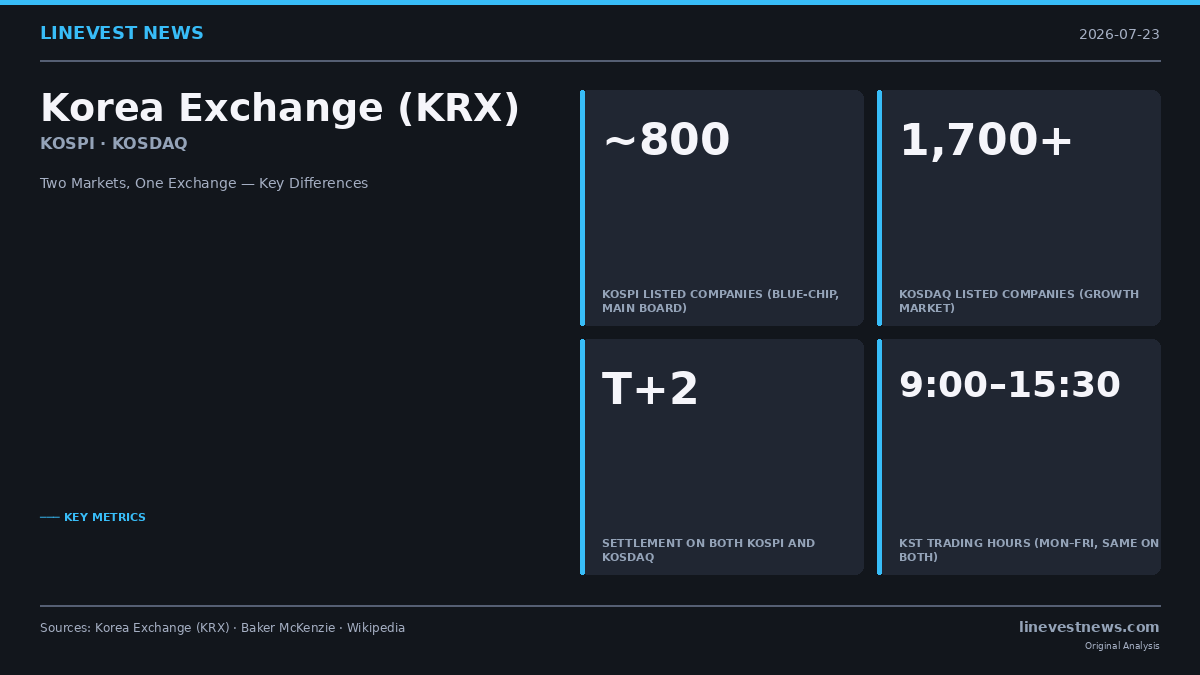
TL;DR - KOSPIは韓国の優良銘柄メインボードで、サムスン、SKハイニックス、現代自動車が上場しています。厳格な上場規定により、実績ある大企業のみが資格を得られます。 - KOSDAQは韓国の成長市場で、1996年に米国NASDAQをモデルとして開設されました。バイオテク、電池材料、テクノロジー分野の1,700社以上が上場しており、エコプロ、アルテオジェン、レインボーロボティクスなどが含まれます。 - 同じ取引所、一つの屋根の下:両市場とも韓国取引所(KRX)が運営しています。取引時間はKST午前9時〜午後3時30分、月曜から金曜です。決済はどちらもT+2です。 - 米国からのアクセス:インタラクティブ・ブローカーズがKRX直接取引を提供しています(2026年5月以降)。KOSPIのみへのエクスポージャーを求める場合、EWY ETFが主要なKOSPI銘柄をカバーしています。
KOSPIとは?
KOSPI(韓国総合株価指数)は韓国の主要株式市場で、1980年1月に開設されました。国内最大規模の確立した企業群のベンチマーク指数であり、米国のS&P 500に相当する重要性を持ちます。
主要データ: - 約800社が上場 - 時価総額合計:約2,200〜2,400兆ウォン(2026年中頃時点でウォン/ドル換算1,480ウォンとして約1.5〜1.6兆米ドル)、韓国の年間GDPに概ね匹敵 - ベンチマーク指数:KOSPI 200(KOSPI上位200銘柄の流動性を追跡)
代表的なティッカー(国際データフィードではサフィックス.KS):
| 企業名 | ティッカー | セクター |
|---|---|---|
| サムスン電子 | 005930.KS | 半導体、家電 |
| SKハイニックス | 000660.KS | DRAM、HBMメモリ |
| 現代自動車 | 005380.KS | 自動車 |
| LGエレクトロニクス | 066570.KS | 家電、OLED |
| POSCOホールディングス | 005490.KS | 鉄鋼 |
| KB金融 | 105560.KS | 銀行 |
| NAVER | 035420.KS | インターネット、AI |
| サムスンバイオロジクス | 207940.KS | CDMO、バイオ医薬品 |
KOSPI上場企業は、輸出志向型(半導体、自動車、造船分野における韓国の世界的製造リーダー)、成熟かつ収益性の高い企業(厳格な上場規定により財務実績が求められる)、配当支払い企業(サムスン電子は四半期配当政策を維持し、株主への年間定期配当を実施)という特徴があります。
KOSDAQとは?
KOSDAQ(韓国証券ディーラー自動見積もりシステム)は1996年7月1日に開設され、米国NASDAQを一部モデルとしています。KOSPIの厳格な要件を満たす前に、テクノロジー、バイオテクノロジー、エンターテインメント分野を中心とした中小規模の高成長企業が公開市場から資本調達できるよう設計されました。
主要データ: - 1,700社以上が上場(KOSPIより大幅に多いが、時価総額合計ははるかに小さい) - 時価総額合計:約350〜420兆ウォン(ウォン/ドル換算1,480ウォンとして約2,370〜2,840億米ドル)、KOSPIの合計の約15〜20% - ベンチマーク指数:KOSDAQ 150(KOSDAQ上位150銘柄を追跡)
代表的なティッカー(国際データフィードではサフィックス.KQ):
| 企業名 | ティッカー | セクター |
|---|---|---|
| エコプロ | 086520.KQ | 電池正極材料(親会社持株) |
| エコプロBM | 247540.KQ | NCA/NCM正極活物質 |
| アルテオジェン | 196170.KQ | 皮下投与薬物デリバリープラットフォーム |
| レインボーロボティクス | 277810.KQ | 協働ロボットおよびヒューマノイドロボット |
| HLB | 028300.KQ | 腫瘍学バイオ医薬品 |
| ヒューゲル | 145020.KQ | 美容/ボツリヌス毒素 |
KOSDAQ上場企業は、成長段階(強い売上成長を示すが、しばしば未黒字または直近で黒字転換)、イノベーション主導(バイオテクパイプライン、半導体材料、AIソフトウェア、Kコンテンツ)、ボラティリティが高い(時価総額が小さく投機的プレミアムが加わるため、KOSDAQ 150はKOSPI 200より大幅に変動が激しい)という特徴があります。
並列比較
| 特徴 | KOSPI | KOSDAQ |
|---|---|---|
| 設立 | 1980年1月 | 1996年7月1日 |
| 役割 | メインボード(優良銘柄) | 成長市場 |
| 上場企業数 | ~800 | 1,700+ |
| 時価総額合計 | ~KRW 2,200–2,400T | ~KRW 350–420T |
| ベンチマーク指数 | KOSPI 200 | KOSDAQ 150 |
| 主要セクター | 半導体、自動車、鉄鋼、銀行、家電 | バイオテク、電池材料、テックスタートアップ、Kコンテンツ |
| ティッカーサフィックス | .KS | .KQ |
| 最低自己資本 | KRW 10 billion | KRW 3 billion |
| 最低時価総額 | KRW 20 billion | KRW 9 billion |
| 事業継続年数 | 3年以上必須 | 不要 |
| 収益性要件 | 必須(例外あり) | 成長段階企業は免除可能 |
| 取引時間 | 9:00 AM – 3:30 PM KST | 同上 |
| 決済 | T+2 | T+2 |
| サーキットブレーカー | 同一規則が適用 | 同一規則が適用 |
| 運営機関 | Korea Exchange (KRX) | Korea Exchange (KRX) |
上場要件:決定的な違い
2つの市場を理解するうえで最も重要な違いは、上場基準にあります。
KOSPIは、ベーカー・マッケンジーのクロスボーダー上場ガイドによれば、最低3年の事業継続年数、少なくとも100億ウォンの自己資本(または200億ウォンの時価総額)、直近事業年度の監査人による無限定適正意見、および過去2年間の限定付適正意見または無限定適正意見を求めています。
KOSDAQは事業継続年数の要件がなく、自己資本は30億ウォン(または時価総額90億ウォン)のみを要し、クリーンな監査意見は1年分で足ります。対象となるテクノロジー企業やバイオテク企業については、収益性要件を全面的に免除することができます。このため、KOSDAQは未黒字のバイオテク企業や初期段階のイノベーターにとって自然なスタート台となっています。
上場移転の道:KOSDAQの企業がKOSPIの要件を満たすほど成長すれば、メインボードへの移転上場を申請できます。現在韓国最大のバイオ医薬品企業の一つであるセルトリオンは、2018年2月にKOSDAQからKOSPIへの移転を完了しました。これは、小規模市場での10年以上にわたる成長の軌跡の後に実現した移転です。
取引メカニズム:同じ運営機関、同じルール
両市場とも韓国取引所(KRX)——本社は釜山——が運営しているため、取引メカニズムは同一です:
取引セッション(KST——韓国標準時、UTC+9、サマータイムなし): - プレマーケットセッション(注文受付):午前8:30〜9:00 - ザラバ取引:午前9:00〜午後3:20 - クロージングオークション:午後3:20〜3:30
決済:T+2。月曜日に約定した取引は水曜日に決済され、金曜日に約定した取引は翌週火曜日に決済されます(土日は非取引日として計算)。
サーキットブレーカーとサイドカー:同一のルールがKOSPIとKOSDAQの両方に適用されます。2026年のサイドカー発動水準、取引停止時間、および過去の事例については、KOSPIのサーキットブレーカーとサイドカールールに関する専用解説をご覧ください。
外国人保有制限:外国人は両市場のほとんどの韓国株式を最大100%まで保有できます。通信、メディア、および一部の公益事業については、セクター固有の上限が設けられています。
パフォーマンス特性:異なるリスクプロファイル
両市場は同じ取引所によって運営されていますが、実際の動きは大きく異なります。
KOSPI 200は半導体への偏重が大きい。サムスン電子とSKハイニックスを合わせると、指数の中で相当の比重を占める。2025〜2026年にかけて、AIが牽引するデータセンター投資サイクルが韓国の半導体株の主要な原動力となり、HBMおよびDRAM需要の急増を背景に両社は過去最高水準の業績を記録した。KOSPIは2025年以降、半導体のAIスーパーサイクルに牽引されて大幅に上昇した。
KOSDAQ 150は異なるリズムを刻む: - バイオテック関連ニュースへのハイベータ:FDAの決定、臨床データ発表、ライセンス契約がKOSDAQ銘柄を大きく動かす - 個人投資家中心:個人投資家がKOSDAQ売買代金に占める割合はKOSPIよりもはるかに高く、上下両方向のモメンタムの振れを増幅させる - イノベーション・プレミアム:アルテオジェン(主力薬の皮下投与技術をメルクおよびアストラゼネカにライセンス供与)やレインボーロボティクス(2026年第1四半期のDARTファイリングによれば、サムスン電子が約35%を保有)などの企業は、パイプラインのオプション価値を背景に割高な倍率で取引されることがある
海外投資家にとって有用な経験則:KOSPIはグローバルな機関資金と外国人投資家が集中する市場であり、KOSDAQは韓国の個人投資家が国内成長ストーリーを追い求める市場だ。
米国投資家がアクセスする方法
| 方法 | KOSPIアクセス | KOSDAQアクセス | 備考 |
|---|---|---|---|
| IBKRを通じたKRX直接取引 | ✅ 完全 | ✅ 完全 | インタラクティブ・ブローカーズは2026年5月にKRX直接取引を開始。取引は韓国市場時間(米国時間日曜〜木曜の夜)に執行される |
| ADR | ✅ 限定的 | ❌ | 一部のKOSPI銘柄が米国上場ADRとして取引されている(例:Samsung SSNLF OTC、KT Corp KT NYSE)。KOSDAQのADRは存在しない |
| EWY ETF(iShares MSCI South Korea) | ✅ 幅広く | ❌ 最小限 | MSCIコリア指数に連動——約90%超がKOSPIの主要銘柄で構成。サムスンが約20〜23%を占める |
| 韓国専門ファンド | ✅ | ファンドにより異なる | 韓国特化型投資信託はKOSDAQへの組み入れ比率が異なる——目論見書を確認のこと |
外国人投資家としてKRXアクセスを設定する手順については、以下のガイドを参照:外国人として韓国株を購入する方法。
重要なポイント
- KOSPI=安定性+規模:韓国の輸出主力企業——半導体、自動車、鉄鋼、銀行業——へのエクスポージャーを求めるなら、KOSPIが主要な市場だ。
- KOSDAQ=リスク+成長:韓国のバイオテック・パイプライン、電池材料のリーダー企業、あるいはAIを活用したロボティクスを探しているなら、KOSDAQがその出発点だ。
- 同一取引所、同一決済:運用上、同じKRX口座でKOSPIまたはKOSDAQの株式を購入する手続きは同一だ。違いが重要なのは、購入する銘柄の種類であり、取引の仕組みではない。
- 指数を理解する:KOSPIの指数は800社超の市場第一部上場企業を追跡し、KOSPI 200が投資可能なベンチマークだ。同様に、KOSDAQ 150はKOSDAQの上位150銘柄のみをカバーしており、1,700社超の全上場銘柄を含むわけではない。
- 市場変更(グラデュエーション)は可能:成功したKOSDAQ企業は、十分な規模に成長すればKOSPIへ市場を変更できる——このグラデュエーション・パスは企業の成熟度と財務的信頼性のシグナルだ。
本稿は教育目的のみを目的としており、投資助言を構成するものではありません。LineVest Newsは登録投資顧問業者ではありません。韓国証券の取引を行う前に、最新の規制および上場要件についてブローカーまたは法律顧問に確認してください。
出典: - 韓国取引所(KRX)——公式サイト - ベーカー・マッケンジー:主要上場要件——韓国証券取引所 - KRX取引時間2026——TradingHours.com - KOSDAQ——Wikipedia - KOSPI——Wikipedia - 韓国取引所——Wikipedia