Korea Biopharma: $10.4B Exports, Approvals Drop 38% — ING
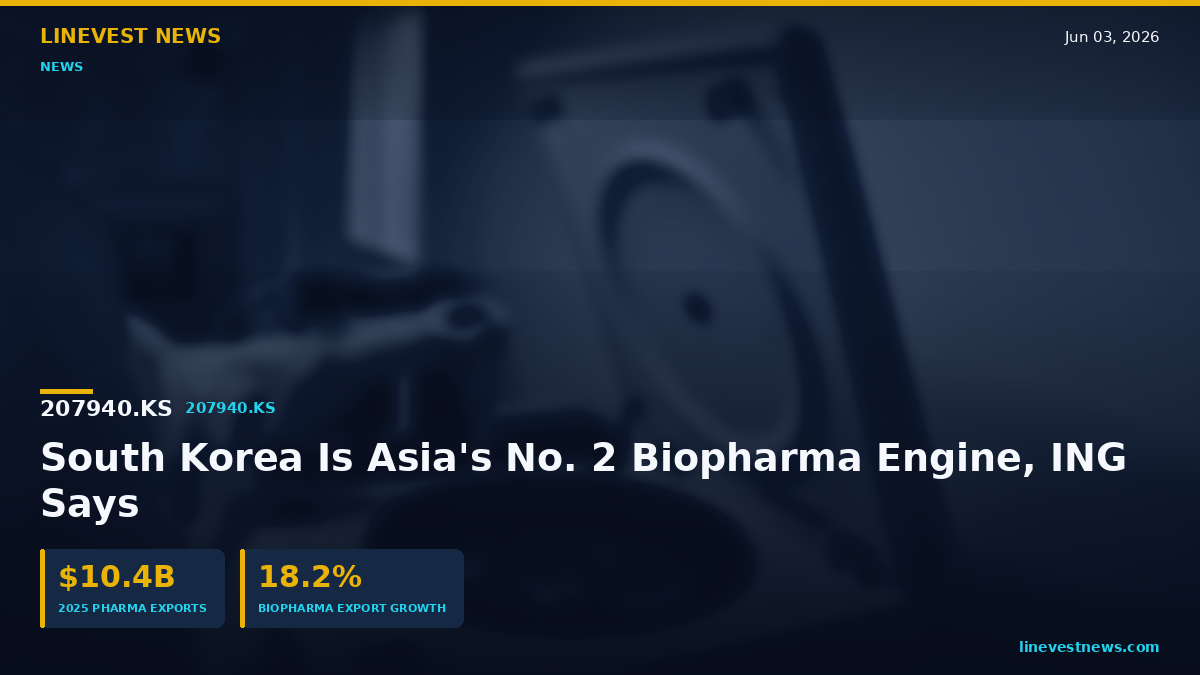
ING Research, the analysis arm of Dutch financial group ING, published a report on June 3 titled "South Korea: Asia's second innovation engine," arguing that Korea has moved past its generics-and-biosimilar roots to become, in its words, "one of Asia's most reliable biopharmaceutical innovation nations" — second only to China (ChosunBiz, June 3, 2026). For an investor, a sell-side label is only as good as the numbers behind it, and the report carries a built-in tension: the export and capacity data are strong, but the domestic pipeline that is supposed to feed the next decade is contracting.
The bull case is in the export line
The hardest number is trade. Korea's pharmaceutical exports reached $10.4 billion (about ₩15.86 trillion) in 2025, up 11.8% year on year and crossing the $10 billion mark for the first time, a figure ING cites and that Korea's Ministry of Health and Welfare independently confirmed (KoreaBiomed, citing the ministry). Biopharmaceuticals — biosimilars and contract-manufactured biologics — made up 62.6% of that total and grew 18.2%, per the ING report (ChosunBiz).
ING sizes the domestic biopharma market at roughly $22 billion, or 13th globally, and notes that sector investment grew at a 21.6% annual average between 2020 and 2022 to about $2.9 billion (around ₩4.4 trillion) (ChosunBiz). It also flags scale in discovery: Korean firms identified more than 1,300 new drug candidates over the past three years, which ING puts at roughly 10% of the global total, and ranks Seoul first worldwide in company-led clinical trials in 2022 (ChosunBiz). At the June 3 rate of about 1,527 won per dollar (Trading Economics), those won and dollar figures line up.
Where the export number actually shows up
The abstraction becomes concrete in two names ING singles out. Samsung Biologics (207940.KS), Korea's largest contract development and manufacturing organization (CDMO), reported 2025 revenue of ₩4.56 trillion ($3.1 billion), up 30.3%, and operating profit of ₩2.06 trillion (about $1.35 billion) — the first time a Korean pharmaceutical or biotech firm cleared the ₩2 trillion operating-profit line, on the back of its Plant 4 ramp-up (KoreaBiomed). Celltrion (068270.KS), Korea's largest biosimilar developer, and Samsung's biosimilar venture Samsung Bioepis round out the cluster of firms ING credits for the sector's re-rating (ChosunBiz).
That is the through-line a fund manager wants: the "innovation engine" framing is, for now, largely a manufacturing-and-biosimilar export story rather than a novel-drug story — a distinction the report itself draws.
The catch ING will not paper over
The same report warns that the pipeline feeding future growth is thinning. The number of active clinical trials in Korea fell to 2,175 last year from 2,307 in 2024, and new drug approvals dropped to 23 in 2024, a 38% decline from the prior year, according to ING (ChosunBiz, confirmed by EBN). ING attributes the drag to long approval timelines, a rigid patent-extension regime, and a complex health-insurance reimbursement system (ChosunBiz).
The historical contrast sharpens the point. Korea's biosimilar export engine was built on a regulatory tailwind — Celltrion's Remsima won the world's first monoclonal-antibody biosimilar marketing authorization from the European Medicines Agency in 2013 (GaBI Online), a first-mover edge that seeded a decade of CDMO and biosimilar scale. The current slowdown in approvals is the opposite signal: capacity is compounding while the domestic novel-drug throughput that would justify the "innovation" half of ING's label is going the other way.
What to watch
The report frames its own verdict as conditional: ING writes that drug-pricing reform, faster approvals, clearer patent protection, and improved reimbursement "will determine whether Korea can leap to a global innovative-drug developer" (ChosunBiz). The concrete confirming-or-refuting data point is the next full-year tally of domestic clinical trials and new approvals — a second straight annual decline would undercut the innovation thesis, while a rebound would back it. Samsung Biologics' and Celltrion's next quarterly results will, separately, show whether the export engine described here is still accelerating.
This article is for informational purposes only and does not constitute investment advice. Figures are drawn from the cited ING Research report as relayed by Korean media and from corporate and government disclosures; readers should verify against primary sources before making decisions.