
AppleAAPL
About Apple
Apple Inc. designs, manufactures, and markets consumer electronics, software, and services, with the iPhone standing as its dominant product line and the largest single contributor to revenue. Beyond the iPhone, the company sells Mac personal computers, iPad tablets, and a Wearables, Home and Accessories category that includes Apple Watch, AirPods, and HomePod. A separate Services segment encompasses the App Store, licensing arrangements with search partners, advertising, AppleCare, iCloud storage, and subscription offerings such as Apple Music, Apple TV+, and Apple Arcade. Hardware supplies the majority of revenue, but Services carries a materially higher gross margin and has become an increasingly important driver of company-level profit as the installed base of active devices has expanded.
Investors track several structural considerations. Apple sits among the largest weights in the S&P 500 and Nasdaq-100, giving it outsized influence on passive flows. Regulatory scrutiny of the App Store commission model spans the European Union's Digital Markets Act, U.S. antitrust litigation, and multiple national inquiries, and the company's search-placement arrangement with Google is itself the subject of ongoing proceedings. Supply chain concentration in China and Taiwan, dependence on TSMC for leading-edge silicon, and exposure to Greater China as an end market are recurring themes. Capital allocation runs through a large, long-standing buyback and dividend program. Governance features include a unitary board and a founder-designated successor CEO.
Apple was founded in 1976 by Steve Jobs, Steve Wozniak, and Ronald Wayne, went public in 1980, and spent the late 1980s and mid-1990s losing ground in personal computing. The 1997 acquisition of NeXT returned Jobs to the company and provided the software foundation that became Mac OS X. The 2001 introduction of the iPod, the 2003 launch of the iTunes Store, and the 2007 debut of the iPhone reoriented Apple from a computer maker into a mobile and services company. Tim Cook succeeded Jobs as chief executive in 2011. The company operates as a single legal entity headquartered in Cupertino, California, with subsidiaries across manufacturing, retail, finance, and content jurisdictions.
Apple sells directly to consumers through its retail stores, online storefronts, and direct enterprise and education channels, and indirectly through wireless carriers, resellers, and large retailers who often subsidize or finance hardware purchases. The competitive position rests on tight integration between in-house silicon, operating systems, and services, reinforced by switching costs within the installed base and a developer ecosystem tied to the App Store. In smartphones the principal rival is the Android ecosystem led by Samsung; in personal computers, Windows OEMs and, at the high end, workstation vendors; in wearables and services, a fragmented set of specialists. Geographically, the Americas contribute the largest share, followed by Europe and Greater China, with Japan and the rest of Asia-Pacific completing the mix.
Company profile by LineVest editorial. Journalism, not investment advice.
Order a report on Apple — $15Apple coverage
5 articles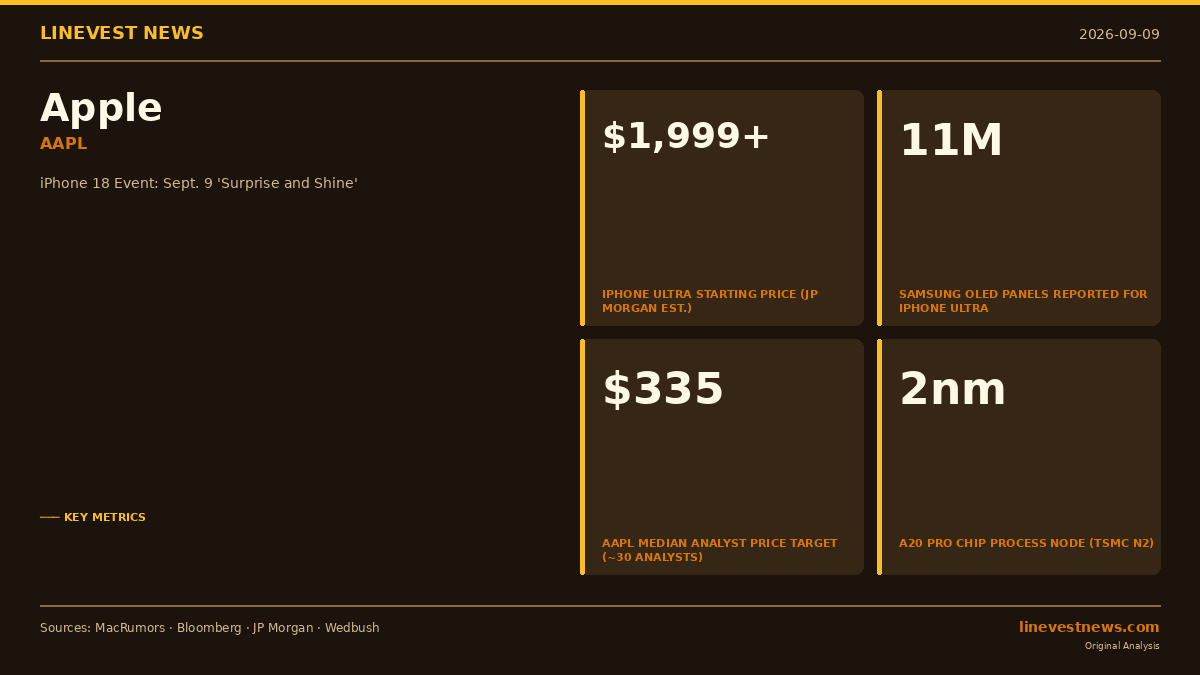
Apple September 9 Event: iPhone 18 Pro and iPhone Ultra — Three Watch Points for AAPL Investors
Apple Sept. 9 event: iPhone Ultra at $1,999–$2,500 analyst starting-price range, iOS 27 Siri AI 12GB gate, Pro list pricing — three watch points for AAPL investors.
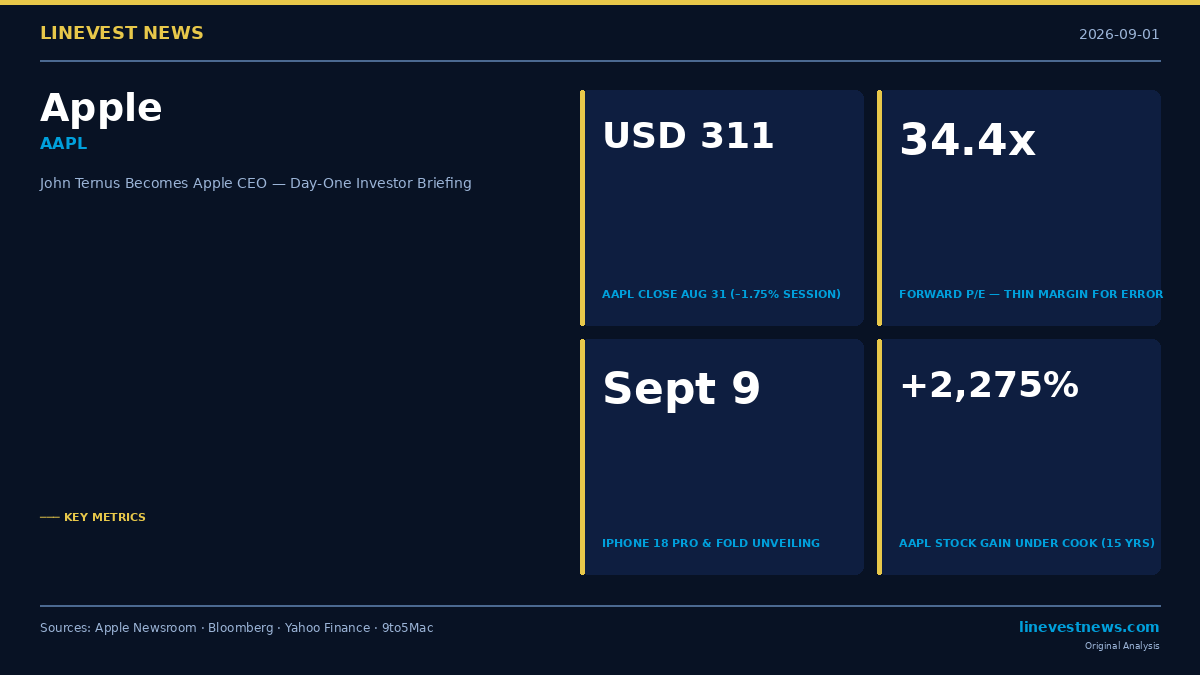
John Ternus Is Now Apple's CEO: A Day-One Investor Briefing on AAPL
Tim Cook steps down today, handing Apple to hardware veteran John Ternus. Three tests ahead: iPhone Fold unveiling (Sept. 9), iOS 27 Siri AI rollout, and Q4 FY2026 earnings.
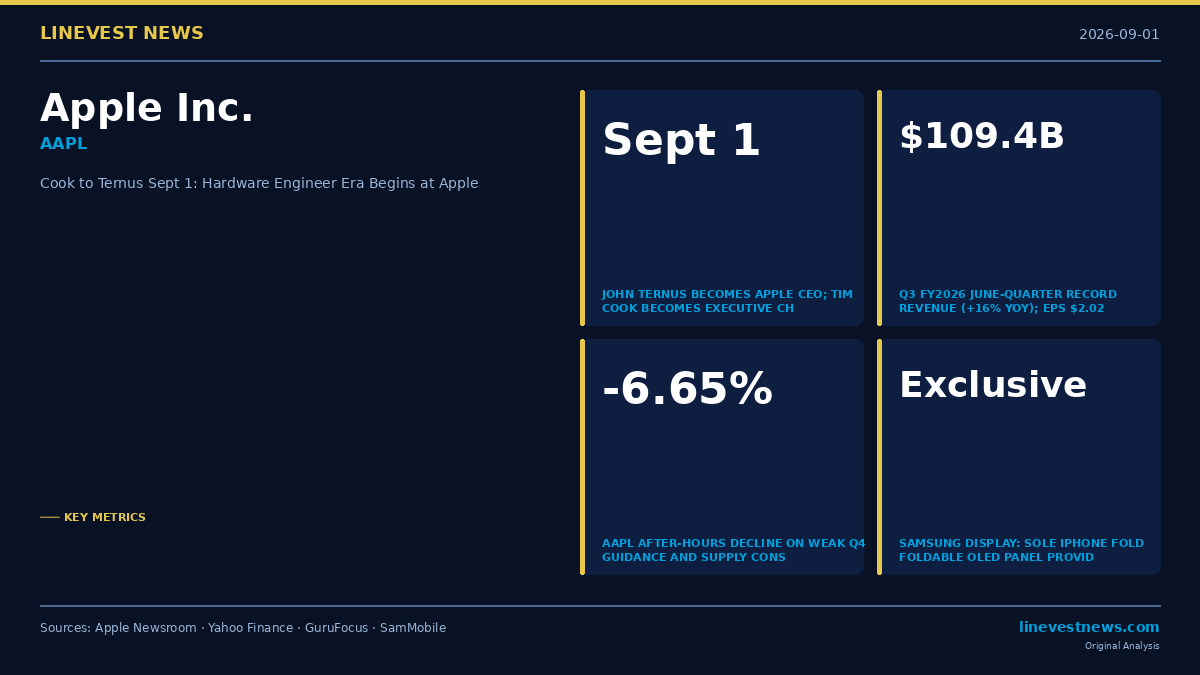
Apple CEO John Ternus Takes Over September 1: What the Engineer Era Means for Korean Suppliers
Tim Cook hands Apple's CEO role to hardware engineer John Ternus on September 1. Here is what the leadership shift means for Samsung Display, SK Hynix, and LG Display.
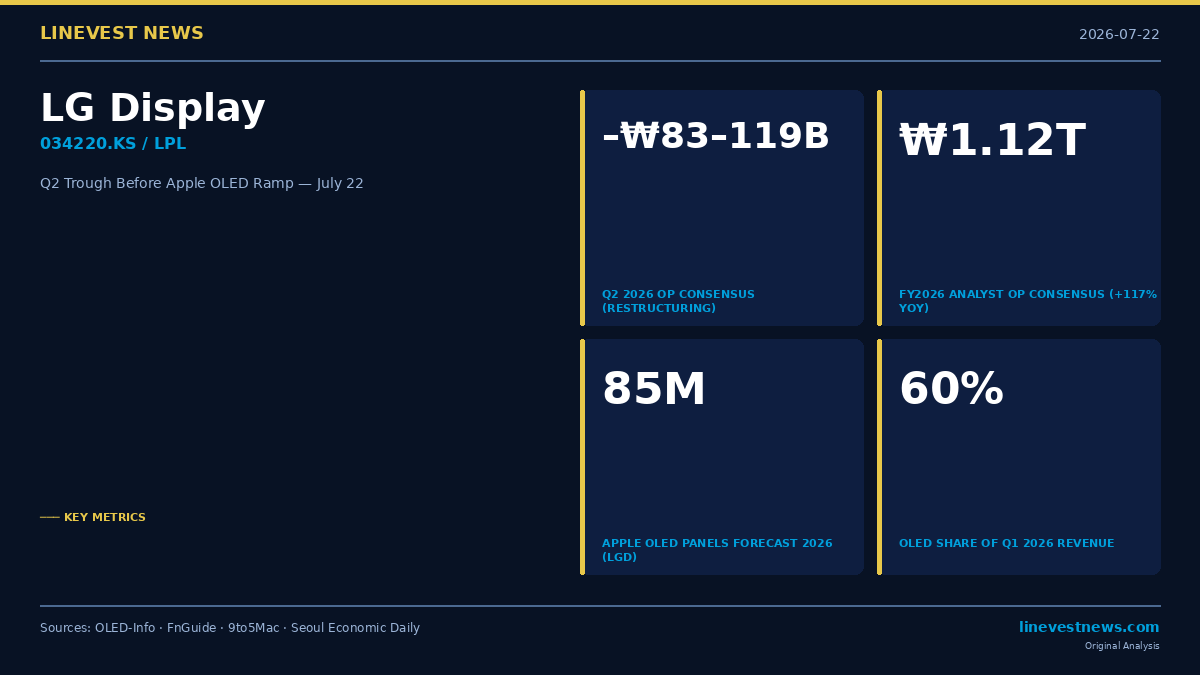
LG Display (034220.KS) Q2 2026 Earnings Preview: Restructuring Trough on July 22 Before Apple OLED Ramp
LG Display reports Q2 2026 on July 22. Consensus: OP loss ₩83–119B on restructuring. Analysts see Q2 as the trough before H2 Apple OLED ramp — BOE shut out of premium models.
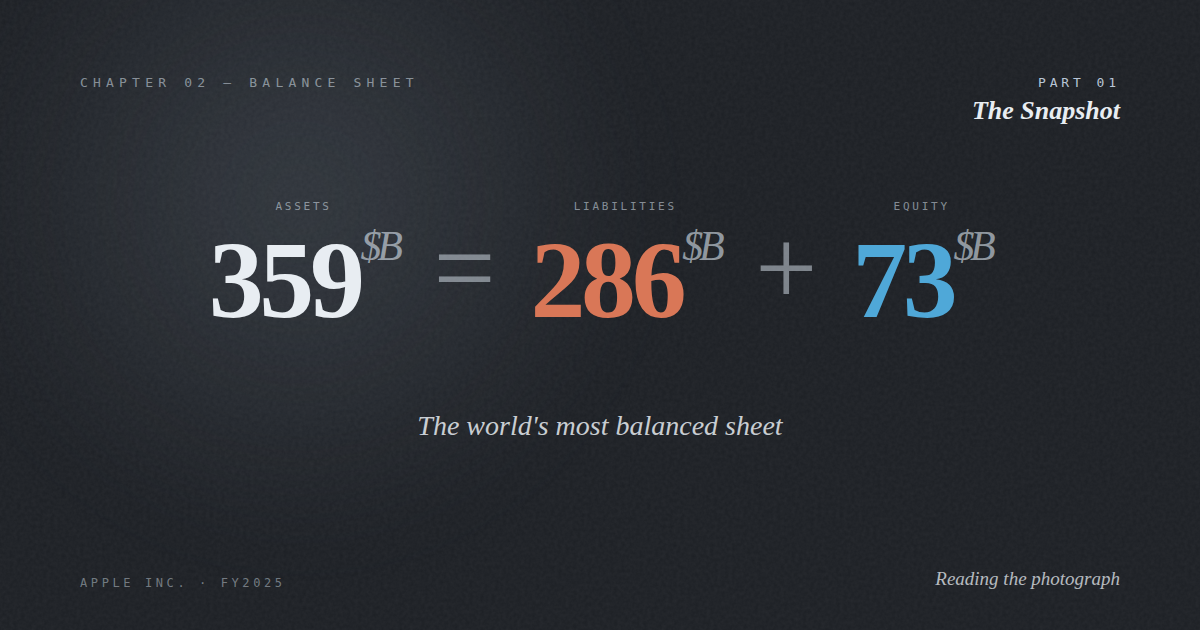
How to Read a Balance Sheet (Part 1): What It Tells You About Apple
Go deeper than the headline
You just read what happened. Here's how to read what it means.
The day's reports, every morning — free
LineVest Daily lands in your inbox before the opening bell with the reports we published that day — what each company's latest 10-K or 10-Q actually says about the numbers, in plain English. Free, no card required.
This report, on any company you name
What you just read on Apple is the format. Name any U.S.-listed company and we do the same for it — its latest SEC filing read in full, financials under US GAAP, governance, and what it means for the stock. PDF in your inbox within 3 hours.
Which company should we read?
$15 · one-time · PDF within 3 hours
Pick a company to continueIndependent journalism based on primary SEC filings — not investment advice. No brokerage affiliation.