CVS Health Q2 2026: $106.1B Revenue Beat, Aetna MBR Drops to 87.4% in Insurance Turnaround
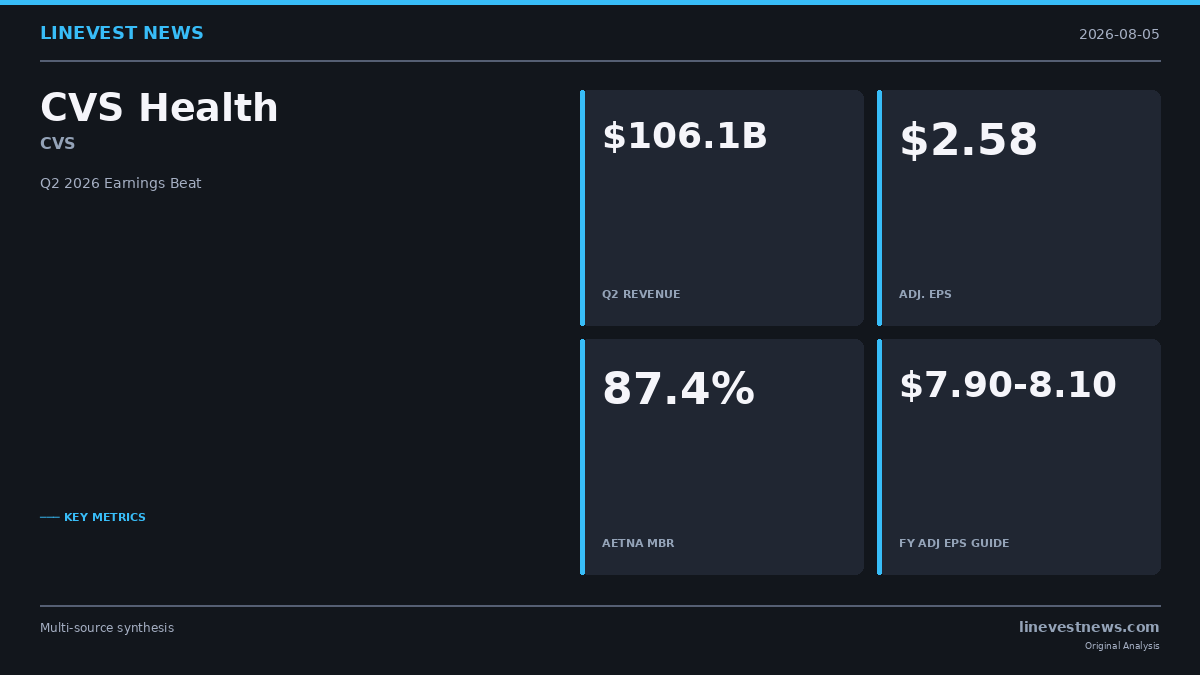
TL;DR - Q2 2026 adjusted EPS of $2.58 beat the $1.85 estimate by 39%; GAAP EPS $2.31 vs. $0.80 a year ago - Revenue reached $106.1 billion (+7.3% YoY), clearing the $100.1B analyst consensus - Aetna medical benefit ratio improved to 87.4% from 89.9% — the clearest sign the insurance margin crisis is ending - Full-year adjusted EPS guidance raised to $7.90–$8.10 (from $7.30–$7.50); operating cash flow guidance hiked to ≥$11.5B (from ≥$9.5B) - New GLP-1 partnership with Eli Lilly: Zepbound and Foundayo pricing to appear in CVS app starting Q4 2026, with $29 MinuteClinic virtual visits
Part A: What CVS Reported
CVS Health (NYSE: CVS) reported second-quarter 2026 results on August 5, delivering a broad-based beat that sent its stock up roughly 1% in premarket trading.
Key Q2 2026 Financial Metrics
| Metric | Q2 2026 | Q2 2025 | Change |
|---|---|---|---|
| Total Revenue | $106.1B | $98.9B | +7.3% |
| GAAP Operating Income | $4.7B | $2.4B | +97.5% |
| Adjusted Operating Income | $5.2B | $3.8B | +35.4% |
| GAAP Diluted EPS | $2.31 | $0.80 | +189% |
| Adjusted EPS | $2.58 | $1.81 | +42.5% |
| Adjusted EPS consensus | $1.85 | — | Beat by ~39% |
Segment Revenue
| Segment | Q2 2026 Revenue | YoY Change |
|---|---|---|
| Health Services (PBM/Pharmacy) | $51.8B | +11.5% |
| Health Care Benefits (Aetna) | $37.5B | +3.5% |
| Pharmacy & Consumer Wellness | $33.8B | +0.7% |
Segment Adjusted Operating Income
| Segment | Q2 2026 Adj. OP Income |
|---|---|
| Health Care Benefits | $2.4B |
| Health Services | $1.7B |
| Pharmacy & Consumer Wellness | $1.5B |
Guidance Raised Across the Board
| Metric | Prior Guidance | New Guidance |
|---|---|---|
| Adjusted EPS | $7.30–$7.50 | $7.90–$8.10 |
| GAAP Diluted EPS | $6.24–$6.44 | $6.84–$7.04 |
| Operating Cash Flow | ≥$9.5B | ≥$11.5B |
| Total Revenue | — | ≥$414.0B |
Year-to-date through Q2, CVS generated $10.6 billion in operating cash flow — a level that already exceeds its prior full-year guidance floor.
Part B: What Investors Need to Know
The Aetna Insurance Turnaround Is Real — and the Numbers Prove It
The most important single figure in CVS's Q2 report is the medical benefit ratio (MBR) of 87.4%, down from 89.9% in Q2 2025. The MBR measures what percentage of insurance premiums the company pays out in medical claims; a lower number means more profit retained.
For context, a MBR above 89–90% is generally considered unprofitable in managed care. CVS's Aetna division spent most of 2024 and early 2025 above that threshold — a key reason why CVS stock lost roughly half its value between 2023 and early 2025. Aetna had to absorb elevated post-COVID utilization it underpriced in earlier policy cycles.
The 250-basis-point improvement in MBR suggests that Aetna's repricing efforts — passing higher costs into 2026 premiums — are taking hold. If the trend holds through H2 2026, the division could return to sustainably profitable levels for the first time since 2022.
Health Care Benefits adjusted operating income of $2.4 billion in a single quarter versus near-zero a year ago is the clearest financial expression of that recovery.
$11.5B Cash Flow Guidance: CVS's True Signal of Confidence
Guidance lifts on EPS are standard; guidance lifts on operating cash flow are harder to game. CVS's decision to raise its operating cash flow target from ≥$9.5B to ≥$11.5B — a $2 billion increase — suggests management has high conviction that the insurance margin improvement is durable, not a one-quarter anomaly. With $10.6B already generated year-to-date, the new floor is effectively a statement that H2 will not give back those gains.
GLP-1 Strategic Positioning: CVS Bets on Becoming the Convenience Hub
The Eli Lilly partnership — which will surface pricing for Zepbound (tirzepatide for obesity) and Foundayo (tirzepatide for type 2 diabetes) directly within the CVS app — matters for two reasons.
First, it positions CVS as a transparent pricing point in a drug category where cost opacity has been a consumer pain point. Same-day pharmacy pickup combined with a $29 MinuteClinic virtual consultation (down from standard pricing) turns CVS into a low-friction access point for the GLP-1 category projected to reach $150 billion globally by the mid-2030s.
Second, it extends the company's vertical integration thesis: CVS benefits not just from dispensing GLP-1 prescriptions through its pharmacy benefit manager (Caremark) but also from patient access fees through MinuteClinic and from capturing more prescription volume directly.
Investors should watch: whether GLP-1 volumes show up in Pharmacy & Consumer Wellness segment growth in Q3 — this quarter, that segment grew only 0.7% YoY, the weakest of the three.
What Could Still Go Wrong
MBR durability: The improvement in Aetna's MBR is impressive, but managed care has historically been volatile. If medical utilization spikes again in Q3 — flu season, extreme heat events, or post-pandemic demand surges — MBR could re-widen before the repricing fully takes hold through 2027 plan years.
Debt load: CVS carries approximately $60 billion in long-term debt, legacy from its $69 billion Aetna acquisition in 2018 and subsequent Signify Health and Oak Street Health deals. High interest rates continue to pressure interest expense even as operating income recovers.
Pharmacy reimbursement pressure: Pharmacy & Consumer Wellness revenue grew only 0.7% YoY. Federal reimbursement reform and competition from Amazon Pharmacy and Mark Cuban's Cost Plus Drugs continue to erode prescription margins.
Stock Context
CVS shares entered Q2 results having roughly doubled from their 2025 lows near $44, recovering to approximately $73. The company's forward P/E on new $7.90–$8.10 guidance is roughly 9×, which remains below managed care peers like UnitedHealth Group (UNH, ~13×) and Cigna (CI, ~11×). The valuation gap reflects lingering concerns about Aetna's multi-year repricing runway, but this quarter's data reduces the bear case meaningfully.
CVS Health Corporation (NYSE: CVS) is one of the largest healthcare companies in the United States, operating pharmacy benefits management, retail pharmacy, and managed care insurance through its Aetna subsidiary.
This article is for informational purposes only and does not constitute investment advice. All figures sourced from CVS Health Q2 2026 earnings press release and investor conference call materials.
Sources: - CVS Health Q2 2026 Press Release – CVS Investor Relations - CVS Health Q2 2026 earnings beat, Eli Lilly weight loss drug deal – Yahoo Finance - CVS blows past estimates, hikes guidance – CNBC - CVS Health Q2 2026 Revenue Hits $106.1B – StockTitan