Kia (000270.KS) Tops Hyundai in Korea, First Time Since 1998
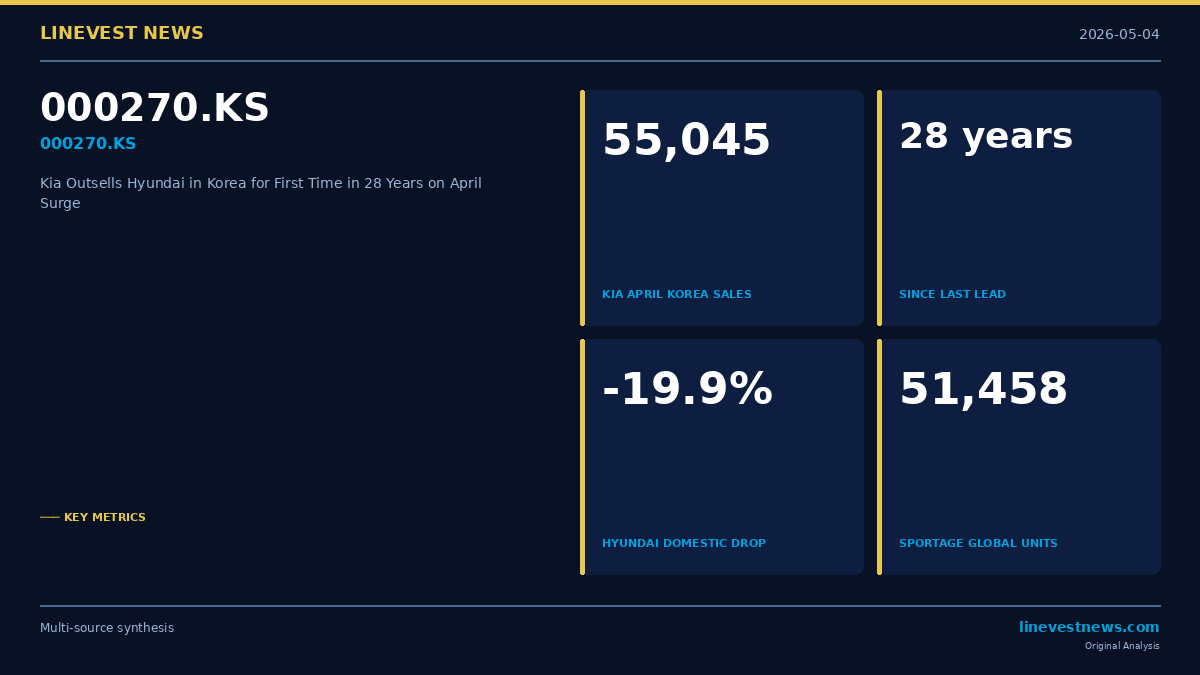
TL;DR - Kia sold 55,045 vehicles in Korea in April 2026, beating sister company Hyundai Motor at home for the first time since their 1998 merger. - Global volume rose 1% year-on-year to 277,188 units, with the Sportage SUV alone contributing 51,458 of those. - Watch whether Hyundai recovers in May as alternative engine-valve suppliers replace the fire-hit Anjun Industry — its April domestic sales fell 19.9%.
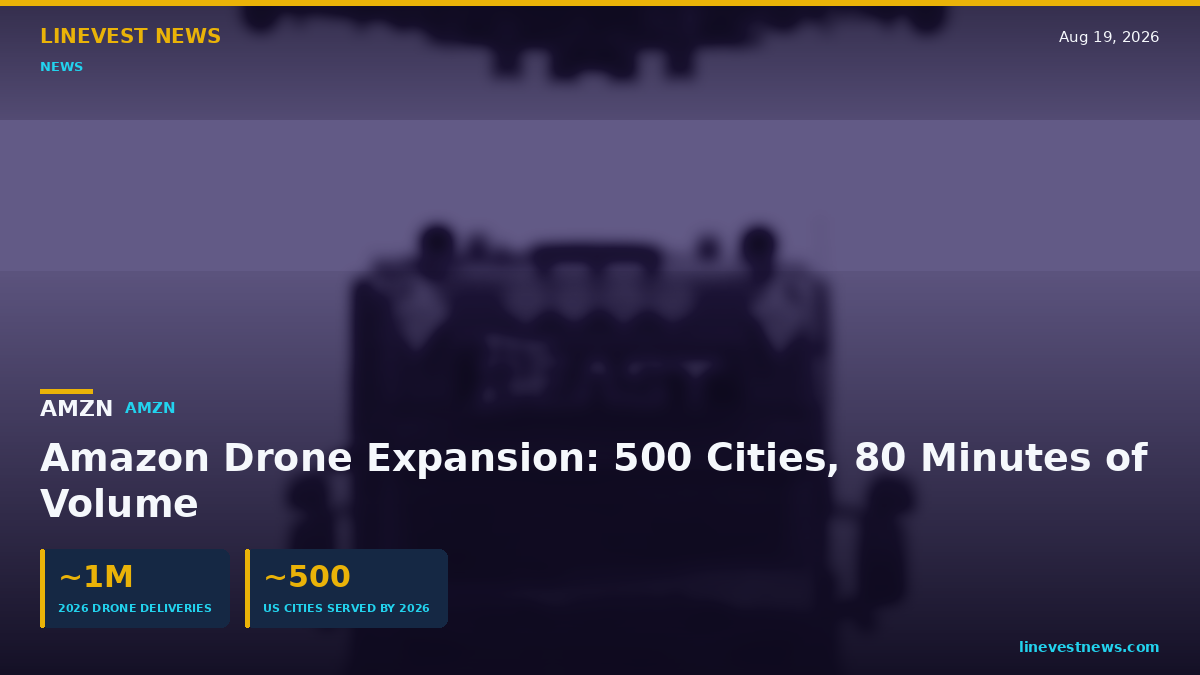
Lead. Kia (000270.KS), Korea's second-largest automaker, said on Monday it sold 55,045 vehicles in its home market in April 2026 — edging ahead of larger sister Hyundai Motor for the first time since the two were combined under Hyundai Motor Group, Korea's largest auto conglomerate, in 1998. The reversal of a 28-year domestic pecking order coincided with a rare own-goal at Hyundai, whose Korean output was hobbled by the deadly March fire at engine-valve supplier Anjun Industry. Globally, Kia volumes rose 1 percent year-on-year to 277,188 units.
What Happened
According to Kia's monthly sales release covered by The Korea Times, the automaker delivered 277,188 vehicles worldwide in April, with domestic sales climbing 7.9 percent year-on-year while overseas dispatches slipped 0.7 percent to 221,692 units. The Sportage compact SUV led the global mix at 51,458 units, followed by the Seltos at 28,377 and the Sorento mid-sized crossover at 22,843. The Sorento alone shifted 12,078 units inside Korea, according to The Korea Herald.
By contrast, Hyundai Motor (005380.KS) — Kia's larger affiliate inside Hyundai Motor Group — sold just 54,051 vehicles domestically, a 19.9 percent year-on-year decline, per Bloomingbit. Hyundai's global volumes fell 8 percent to 325,589 units, with overseas sales off 5.1 percent to 271,538 units.
Why It Matters
The April figures mark the first concrete signal that Kia, long cast as the junior partner inside Hyundai Motor Group, can lead the flagship brand in its core market when product cycles align. The reversal also lays bare a structural risk in Korean auto manufacturing: how dependence on a single tier-one supplier can erase a month of domestic volume. Hyundai's slump traces to the March 20 fire at Anjun Industry's plant in Daejeon's Daedeok District, which killed 14 workers and injured around 60, per Travel And Tour World. The blaze disrupted supply of valves used in Hyundai's 2.5-litre turbo engines, according to Bloomingbit, which weighs disproportionately on the group's premium nameplates.
Business Impact
For Kia, April's outperformance was driven by SUVs and electrified models. The Korea Herald reported that the Carnival minivan added 4,995 domestic units, the Sportage 4,972 and the EV3 electric SUV 3,898. Kia indicated it intends "to sustain its sales momentum by focusing on eco-friendly vehicles such as electric models and hybrid SUVs," per the Korea Herald.
For Hyundai, the parts shortage has hit some of its highest-margin nameplates. Bloomingbit cited a Hyundai official noting that production of the Palisade large SUV and the Genesis G70, G80, GV70 and GV80 luxury models was disrupted, with the company planning a recovery anchored by the refreshed Grandeur sedan. The official said "supplier parts shortages coincided with waiting demand for new models" during the month, per Bloomingbit.
Industry & Historical Context
Kia became part of Hyundai Motor Group when Hyundai Motor acquired the bankrupt automaker in 1998, per The Korea Times. Since then, Hyundai has consistently led monthly Korean retail volumes — until April. Yonhap News Agency, Korea's largest wire service, separately reported in its April industry roundup that combined April global shipments at Korea's five domestic carmakers — Hyundai, Kia, GM Korea, KG Mobility and Renault Korea — fell 3.3 percent year-on-year, indicating that weakness extended beyond a single supply-chain shock.
Kia also said sales softness outside Korea reflected the conflict between the United States and Iran, which weighed on demand in the Middle East and Africa, per The Korea Times. The company added that demand outside the Middle East remained robust.
What to Watch
- May data: Whether Hyundai's domestic volumes rebound as the group seeks alternative engine-valve suppliers following the Anjun fire, per The Asia Business Daily.
- Mix shift: Whether the EV3 and other electrified Kia models can sustain the domestic momentum that pushed the brand past Hyundai for the first time since the 1998 merger.
- Geopolitics: Whether continued US-Iran tensions extend the drag on Kia's Middle East and Africa volumes.
- Safety probe: The status of investigations into Anjun Industry, where employees told local broadcaster TV Chosun that earlier fires at the plant had been hushed up by higher-ups, per The Korea Herald.
Sources: - The Korea Times — https://www.koreatimes.co.kr/business/companies/20260504/kias-global-sales-up-in-april-outpace-hyundai-in-home-market - The Korea Herald (Kia April sales) — https://www.koreaherald.com/article/10731100 - The Korea Herald (Anjun Industry fires concealed) — https://www.koreaherald.com/article/10701196 - Bloomingbit — https://en.bloomingbit.io/feed/news/111307 - Travel And Tour World — https://www.travelandtourworld.com/news/article/daejeon-south-korea-car-parts-factory-fire-at-anjun-industrial-in-daedeok-kills-14-and-injures-60/ - The Asia Business Daily — https://www.asiae.co.kr/en/article/2026032315240162850 - Yonhap News Agency — https://www.yna.co.kr/view/AKR20260504127500003 - Maeil Business Newspaper — https://www.mk.co.kr/news/business/12035592
By LineVest Markets Desk — May 4, 2026
This article is for informational purposes only and does not constitute investment advice.