Riding the Power Infrastructure Supercycle — Operating Income Approaches ₩1 Trillion
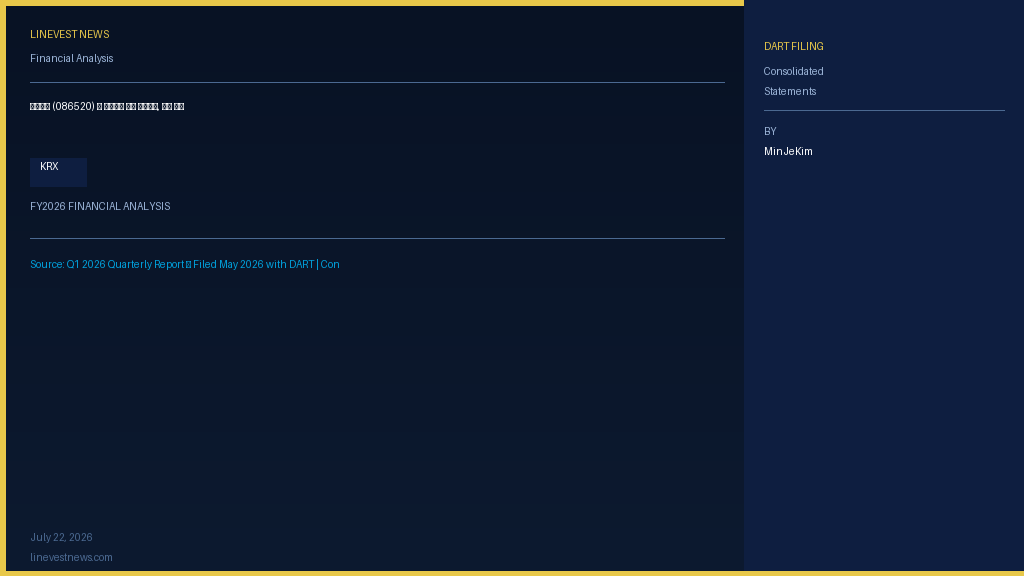
Source: Annual Report (9th FY) — Filed March 16, 2026 with DART | Consolidated Financial Statements | Unit: KRW millions
HD Hyundai Electric posted record consolidated revenue of ₩4.08 trillion in FY2025, up 22.8% year-on-year, as the global power infrastructure supercycle entered full swing. Surging AI data center investment, U.S. grid modernization spending, and Chinese supplier exclusion policies converged to drive operating income up 48.8% to ₩995.3 billion — just shy of the symbolic ₩1 trillion threshold. Operating margin reached 24.4%, a 12.7 percentage-point improvement from 11.7% just two years ago. This in-depth report draws directly from the DART-filed annual report to analyze HD Hyundai Electric's income statement, cost structure, balance sheet, cash flow dynamics, and key financial ratios.
Key Financial Highlights at a Glance
| Metric | FY2025 | FY2024 | YoY |
|---|---|---|---|
| Revenue | ₩4.08T | ₩3.32T | ▲ 22.8% |
| Operating Income | ₩995.3B | ₩669.0B | ▲ 48.8% |
| Operating Margin | 24.4% | 20.1% | +4.3%p |
| Net Income | ₩731.8B | ₩498.4B | ▲ 46.8% |
| EBITDA Margin | 26.2% | 22.1% | +4.1%p |
| Operating Cash Flow | ₩959.6B | ₩1,033.7B | ▼ 7.2% |
| Order Backlog | ₩9.42T | ₩7.76T | ▲ 21.4% |
| Debt-to-Equity | 134.6% | 151.8% | -17.2%p |
Revenue has compounded at approximately 22.7% annually over three years, crossing ₩4 trillion for the first time. Order backlog at year-end stood at ₩9.42 trillion — equivalent to approximately 2.3 years of current revenue — providing exceptional forward earnings visibility. HD Hyundai Electric has publicly disclosed FY2026 revenue guidance of ₩4.35 trillion, signaling continued double-digit growth ahead.
1. Revenue and Profitability Analysis
Three Consecutive Years of Double-Digit Revenue Growth
Consolidated revenue rose from ₩2.70T (FY2023) to ₩3.32T (FY2024) and ₩4.08T (FY2025), with each year delivering growth in the 22–23% range. The consistency of this trajectory — sustained across different macroeconomic environments — reflects structural demand rather than cyclical rebound.
Product Mix and Customer Concentration
| Product Segment | Revenue Share | FY2025 Dynamics |
|---|---|---|
| Power Equipment (transformers, HV breakers) | 70% | Core growth driver; North America & Middle East leading demand |
| Distribution Equipment (switchgear, breakers) | 16% | U.S. market penetration accelerating via UL certification |
| Rotating Machinery (motors, generators) | 14% | Stable industrial demand with steady contribution |
Revenue is split across three product lines: Power Equipment (transformers, high-voltage circuit breakers) at 70%, Distribution Equipment (switchgear, low-voltage breakers) at 16%, and Rotating Machinery (motors, generators) at 14%. Exports account for 77% of total revenue — a figure that underscores the company's transformation from a Korea-focused manufacturer into a global power infrastructure supplier. Three customers each exceed 5% of consolidated revenue: Saudi Electricity Company, Xcel Energy, and NextEra Energy.
Operating Income and Margin: A Structural Step-Change
Operating income surged from ₩315.2 billion (FY2023) to ₩669.0 billion (FY2024) and ₩995.3 billion (FY2025) — a 3.2x increase in two years. The operating margin expanded from 11.7% to 24.4%, an improvement that is rarely seen at this scale in industrial manufacturing. Four factors explain the expansion: (1) surging customer demand enabling price premium capture, (2) a 19% decline in steel plate costs from FY2023, (3) a richer product mix toward ultra-high-voltage transformers, and (4) strong operating leverage as fixed cost growth (+6.3%) lagged far behind revenue growth (+22.8%).
Net Income: Solid Despite Tax Headwind
Net income grew 46.8% to ₩731.8 billion. The main drag was a near-fourfold surge in corporate tax payments from ₩68.6 billion to ₩292.4 billion — a direct consequence of the company's dramatically higher taxable income. Stripping out this tax effect, the underlying earnings quality is strong and improving. There were no material one-off gains or losses in FY2025, making this a clean read on core operating performance.
2. Cost Structure: Fixed vs. Variable
The nature-of-expense note in the consolidated financial statements (Note 29) provides a detailed breakdown of HD Hyundai Electric's ₩3.08 trillion total cost base. As a capital-intensive manufacturer, variable material costs dominate — but the fixed cost base is disciplined, and the gap between revenue and cost growth rates is widening in the company's favor.
| Cost Category | FY2025 (KRW M) | Share | FY2024 (KRW M) | YoY |
|---|---|---|---|---|
| Variable — Net material costs | 1,977,722 | 64.1% | 1,590,096 | +24.4% |
| Fixed — Personnel expenses | 379,934 | 12.3% | 361,422 | +5.1% |
| Fixed — Total D&A (PP&E + ROU + intangibles) | 73,588 | 2.4% | 65,122 | +13.0% |
| Other mixed (outsourcing, R&D, SG&A) | 652,941 | 21.2% | 636,738 | +2.5% |
| Total operating costs | 3,084,185 | 100% | 2,653,378 | +16.2% |
The 'Other' category (₩652.9 billion) is a mixed bag that includes both variable components — outsourcing fees, power costs, consumables, warranty expense, and sales commissions — and fixed components such as R&D (경상개발비: ₩85.9 billion), insurance, rent, and IT costs. Key items within SG&A include warranty provisions (₩31.0B), sales commissions (₩30.8B), advertising (₩23.6B), and outsourced services (₩18.9B). R&D intensity at approximately 2.2% of revenue is modest relative to software peers, but reflects the engineering-driven, custom-manufacturing nature of the business.
The key takeaway from the cost structure: fixed costs grew just 6.3% against 22.8% revenue growth, generating powerful positive operating leverage. As capacity expansions come online in FY2026–2027, depreciation will increase — but if revenue scales proportionally, margin dilution should be limited.
3. Balance Sheet Analysis
Assets: Cash-Rich with Accelerating Capital Investment
Total assets grew 25.7% to ₩47.7 trillion at year-end. Cash and cash equivalents surged 66.9% to ₩950.8 billion, driven primarily by advance payments (contract liabilities) received from customers ahead of delivery. Inventory expanded to ₩1.27 trillion — a 17.1% increase — reflecting pre-positioned raw materials and work-in-progress for a swelling order book. PP&E jumped 29.1% to ₩942.7 billion as factory expansions in Ulsan and Alabama progressed. Intangible assets at ₩65.2 billion are largely stable, reflecting the company's asset-heavy, hardware-centric business model.
Equity: Retained Earnings as the Sole Growth Engine
Total equity reached ₩20.3 trillion. Paid-in capital and capital surplus have remained virtually unchanged at ₩582.5 billion for three consecutive years — there has been no dilutive equity issuance. In sharp contrast, retained earnings tripled from ₩396.6 billion (FY2023) to ₩1,322.7 billion (FY2025), entirely funded by accumulated operating profits. This structure — where retained earnings now represent over 65% of total equity — reflects exceptional capital quality and disciplined financial management spanning multiple years.
Liabilities: Financial Debt at a Historic Low, Contract Liabilities Soaring
Total liabilities of ₩27.4 trillion are dominated by operating liabilities. Financial debt (borrowings, bonds, and lease liabilities combined) has contracted sharply — from ₩745 billion (FY2023) to just ₩274 billion (FY2025), a 63% reduction over two years. Meanwhile, contract liabilities (advance payments from customers) expanded from ₩468 billion to ₩1,483 billion over the same period. This is not financial risk — it is a balance sheet expression of order momentum. The debt-to-equity ratio improved from 175.3% (FY2023) to 134.6% (FY2025), a 40.7 percentage-point structural improvement.
4. Cash Flow Analysis
Operating Cash Flow: Strong Generation, Tax-Compressed
The company's three-year operating cash flow trajectory — from ₩(22.4B) in FY2023 to ₩1,033.7B in FY2024 to ₩959.6B in FY2025 — tells the story of a business that went from cash-burning to cash-generating in a single year. The FY2025 decline from FY2024 is entirely attributable to the 4.3x surge in corporate tax payments (₩292.4B vs. ₩68.6B), which were deferred in prior years when the company had lower taxable income. Cash generated from operations before taxes actually improved to ₩1.24 trillion.
| Item | FY2025 (KRW M) | FY2024 (KRW M) | FY2023 (KRW M) |
|---|---|---|---|
| Operating Cash Flow | 959,573 | 1,033,722 | (22,439) |
| Cash from operations (pre-tax) | 1,240,345 | 1,115,121 | 19,440 |
| Interest received | 24,716 | 13,372 | 5,690 |
| Interest paid | (13,040) | (26,152) | (36,943) |
| Corporate taxes paid | (292,448) | (68,623) | (10,631) |
| Investing Cash Flow | (225,911) | (143,186) | (93,296) |
| CapEx — PP&E purchases | (233,500) | (121,641) | (75,378) |
| Financing Cash Flow | (349,597) | (517,934) | 118,221 |
| Net debt repayment | (108,239) | (427,493) | 148,658 |
| Dividends paid | (221,347) | (75,583) | (17,996) |
| Net change in cash | 381,010 | 393,674 | 3,412 |
CapEx: Record Investment in Growth Infrastructure
Capital expenditure hit a record ₩233.5 billion in FY2025 — a 92% year-on-year increase and a 3.1x jump from FY2023's ₩75.4 billion. This investment primarily funds the Ulsan Phase 1 capacity expansion (completed September 2025) and the Alabama Phase 2 plant groundbreaking (targeted completion: early 2027). Once fully operational, these expansions are expected to add approximately ₩200 billion in annual revenue capacity. Free cash flow (operating CF minus CapEx) remained positive at approximately ₩726 billion, though the CapEx cycle is expected to remain elevated through FY2026.
Dividends Triple: Entering the Shareholder Return Phase
Dividends paid surged to ₩221.3 billion in FY2025 — almost three times the FY2024 level (₩75.6B) and 12x the FY2023 payout. No share buybacks were executed in FY2025, in contrast to prior-year behavior. This sharp dividend acceleration signals management's confidence in the durability of the earnings cycle, and the company's transition from a debt-reduction-focused to a shareholder-return-focused capital allocation posture.
5. Key Financial Ratios
| Ratio | FY2025 | FY2024 | FY2023 | Trend |
|---|---|---|---|---|
| Current Ratio | 134.4% | 138.1% | 131.8% | Stable |
| Debt-to-Equity | 134.6% | 151.8% | 175.3% | ▼ Improving |
| ROE | ~41% | ~39% | ~28% | ▲ Improving |
| ROA | ~17% | ~15% | ~10% | ▲ Improving |
| EBITDA Margin | 26.2% | 22.1% | 14.4% | ▲ Improving |
| Operating Margin | 24.4% | 20.1% | 11.7% | ▲ Improving |
| Order Backlog / Revenue | 2.3x | 2.0x | — | ▲ Improving |
All key profitability and leverage metrics have improved consistently across the three-year period. ROE of approximately 41% is exceptional by any standard, reflecting the combination of high net margins and a lean balance sheet. The order backlog-to-revenue multiple of 2.3x provides forward earnings visibility that is unusual for a manufacturing business of this size, effectively de-risking near-term revenue projections.
6. Why Did Performance Surge from FY2024?
The step-change in profitability from FY2024 onward was not a one-off event — it reflects the convergence of three structural demand drivers alongside disciplined company-specific execution. FY2023 was the inflection point: operating CF turned sharply negative that year as legacy contracts at older pricing were completed, while the company ramped its sales pipeline at new, higher price points. FY2024 marked the first year those re-priced contracts converted into revenue at scale.
(1) AI Data Center Power Demand — The Primary Catalyst
Meta, Google, and Apple dramatically scaled data center investment to support generative AI workloads. AI-optimized data centers require 5–10x more power per square foot than conventional facilities, triggering unprecedented demand for high-voltage transformers, switchgear, and power distribution infrastructure. HD Hyundai Electric's North America revenue surged from approximately ₩420 billion (FY2022) to ₩1.61 trillion (FY2025) — a near-4x increase in just three years — driven almost entirely by Big Tech data center buildouts. The company's three largest customers (Saudi Electricity Company, Xcel Energy, NextEra Energy) collectively reflect both the utility-side grid investment cycle and the data center power chain.
(2) Structural Supply Shortage — The Margin Amplifier
U.S. power transformer demand has risen approximately 119% since 2019 (Wood Mackenzie). Supply shortages are structural rather than cyclical: transformer manufacturing requires highly specialized welding, insulation, and testing skills that take close to a decade to develop. Wood Mackenzie estimated a roughly 30% supply deficit in 2025, with lead times for large power transformers extending to multi-year horizons. In this environment, HD Hyundai Electric pivoted to a 'slot reservation' pricing strategy — selectively accepting only the most profitable orders — which enabled sustained margin expansion even as order volumes grew. The company notes it is now able to pass commodity cost increases through to customers at contract inception, dramatically reducing input cost exposure.
(3) Geopolitical Tailwinds — China Exclusion and Tariff Pass-Through
U.S. policy increasingly restricts Chinese suppliers from participating in critical infrastructure procurement, redirecting large-scale transformer orders toward Korean, European, and domestic U.S. manufacturers. HD Hyundai Electric — which established its Alabama production facility in 2011 — was uniquely positioned to capture this demand shift with an existing U.S. footprint. Additionally, the company negotiated an unusual contractual arrangement: U.S. buyers directly absorb import tariffs (up to 20%) rather than passing them back to the supplier, adding incremental margin without complicating revenue recognition. Raw material tailwinds also contributed: the company's primary input, steel plate, fell 19% from FY2023 to FY2025, while pricing power enabled the company to retain the savings rather than pass them through.
7. Key Takeaways and Outlook
HD Hyundai Electric's FY2025 results confirm a structural inflection, not a cyclical peak. The company has transitioned from a leveraged, margin-compressed manufacturer into a cash-generative, pricing-power-equipped platform with a multi-year earnings runway backed by ₩9.42 trillion in contracted backlog. The publicly disclosed FY2026 revenue target of ₩4.35 trillion (+6.6%) is conservative relative to recent growth rates and is already well-supported by existing orders.
Several structural growth catalysts remain in early stages. The second Alabama plant (targeted: early 2027) and Ulsan Phase 2 expansion will add an estimated ₩200 billion in annual production capacity. The company is also actively pursuing package deal contracts — bundling ultra-high-voltage transformers with medium- and low-voltage distribution equipment — following its UL certification for low-voltage circuit breakers in the North American market. Europe, where revenue grew 38.3% in FY2025 to represent over 10% of total sales, represents a meaningful incremental growth vector as the continent accelerates grid investment under its REPowerEU energy security framework.
The primary risks to monitor are: (1) U.S. tariff policy shifts — tariff absorption by buyers is currently voluntary and commercially negotiated, not legislatively mandated, making it subject to renegotiation in future contracts; (2) electrolytic copper pricing — copper rose 17% over the three-year period and, unlike steel plate, has not provided a cost tailwind; (3) CapEx-driven FCF compression — if the investment cycle remains elevated through FY2027, dividend growth may moderate; (4) customer concentration — three customers represent over 15% of revenue, creating single-counterparty exposure; and (5) geopolitical risk in the Middle East, where Saudi Electricity Company is a top-3 customer.
Overall, HD Hyundai Electric stands as the clearest beneficiary of the global power infrastructure supercycle — a confluence of AI electrification, energy transition, and grid modernization that industry analysts broadly expect to sustain through the early 2030s. With a clean balance sheet, growing shareholder returns, and one of the strongest order backlogs in its history, the company's medium-term earnings trajectory appears well-anchored.
Disclaimer: This report is prepared for informational purposes only, based on HD Hyundai Electric's FY2025 Annual Report filed with DART on March 16, 2026. All figures are sourced directly from the consolidated financial statements. This document does not constitute investment advice, and readers should conduct their own due diligence before making any investment decisions.