
AdobeADBE
關於Adobe
Adobe Inc. 是一家以三大報告分部為核心架構的軟體公司:數位媒體(Digital Media)、數位體驗(Digital Experience)及出版與廣告(Publishing and Advertising)。數位媒體為規模較大的業務,通常貢獻絕大部分的營業利潤;旗下涵蓋 Creative Cloud——包含 Photoshop、Illustrator、Premiere Pro、InDesign、After Effects 及 Lightroom 等應用程式的訂閱套件——以及以 Acrobat、Adobe 自主研發的 PDF 格式及電子簽名服務為核心的 Document Cloud。數位體驗分部則為面向大型品牌的企業級行銷、分析、電子商務及內容管理套件,在客戶數據與行銷活動技術棧領域直接與 Salesforce 及 Oracle 競爭。出版與廣告分部佔整體營收比重較小。終端市場涵蓋個人創作者、小型企業、廣告代理商,以及《財富》500 強企業的行銷與資訊技術部門。
投資者持續關注數項結構性議題。Adobe 在創意工具領域的競爭護城河,正面臨生成式 AI 圖像、影片與設計模型帶來的新一波壓力;管理層的因應策略——包括 Firefly 系列產品、針對企業客戶的賠償保障立場,以及 AI 功能在 Creative Cloud 中的封裝與定價方式——均是市場持續審視的焦點。資本配置方面,公司以軟體業等級的自由現金流支持大規模且持續性的股票回購,並不派發普通現金股息。公司治理結構清晰,採單一類別普通股架構。Adobe 納入標準普爾 500 指數(S&P 500)及那斯達克 100 指數(Nasdaq-100),具有相當的指數權重。在反壟斷審查阻擋一項重大收購計畫後,公司的監管應對姿態愈發受到關注,並深刻影響未來大型交易的推進策略。
Adobe 由 John Warnock 與 Charles Geschke 於 1982 年 12 月在矽谷共同創立,兩位創辦人均曾任職於全錄(Xerox)帕羅奧多研究中心(PARC),公司最初以商業化奠定桌面出版基礎的 PostScript 頁面描述語言起家。1994 年收購 Aldus 帶來了 PageMaker,以及更具戰略意義的 Photoshop 周邊應用生態系;Photoshop 本身則更早已取得授權。最具轉型意義的策略轉捩點出現於 2012 至 2013 年,Adobe 將其買斷授權的 Creative Suite 遷移至 Creative Cloud 訂閱制模式,將營收基礎重塑為經常性的軟體即服務(SaaS)收入。此後公司透過一系列收購持續擴充企業技術棧——包括 Omniture(2009 年)、Marketo(2018 年)及 Magento(2018 年)——而原定於 2022 年宣布、計劃收購設計平台 Figma 的交易,則因歐洲及英國監管機構提出反對,於 2023 年宣告放棄。
公司營收以訂閱制為主,向個人用戶、小型企業、教育機構及企業客戶按月或按年計費,並以轉售商、經銷商及 OEM 合作夥伴作為直銷渠道的補充。Creative Cloud 依消費者、團隊及企業等不同層級,以單一應用程式或全套應用程式方案銷售;Document Cloud 透過 Acrobat 訂閱及按次計費的電子簽名使用量實現變現;數位體驗分部則以多年期企業合約形式銷售,通常依用量或席位數計費,並多附帶專業服務。競爭優勢奠基於格式所有權(PDF)、整合式創意應用程式所形成的工作流程鎖定效應,以及生成式功能的自有訓練數據策略。主要競爭對手包括創意領域的 Canva 及開源工具、電子簽名領域的 DocuSign,以及數位體驗領域的 Salesforce、Oracle 與 Microsoft。美洲地區貢獻最大份額的營收,其次依序為歐洲、中東及非洲(EMEA)地區與亞太地區。
公司簡介由LineVest編輯部撰寫。屬新聞報導,非投資建議。
委託撰寫Adobe的SEC完整報告 →Adobe相關報導
3篇文章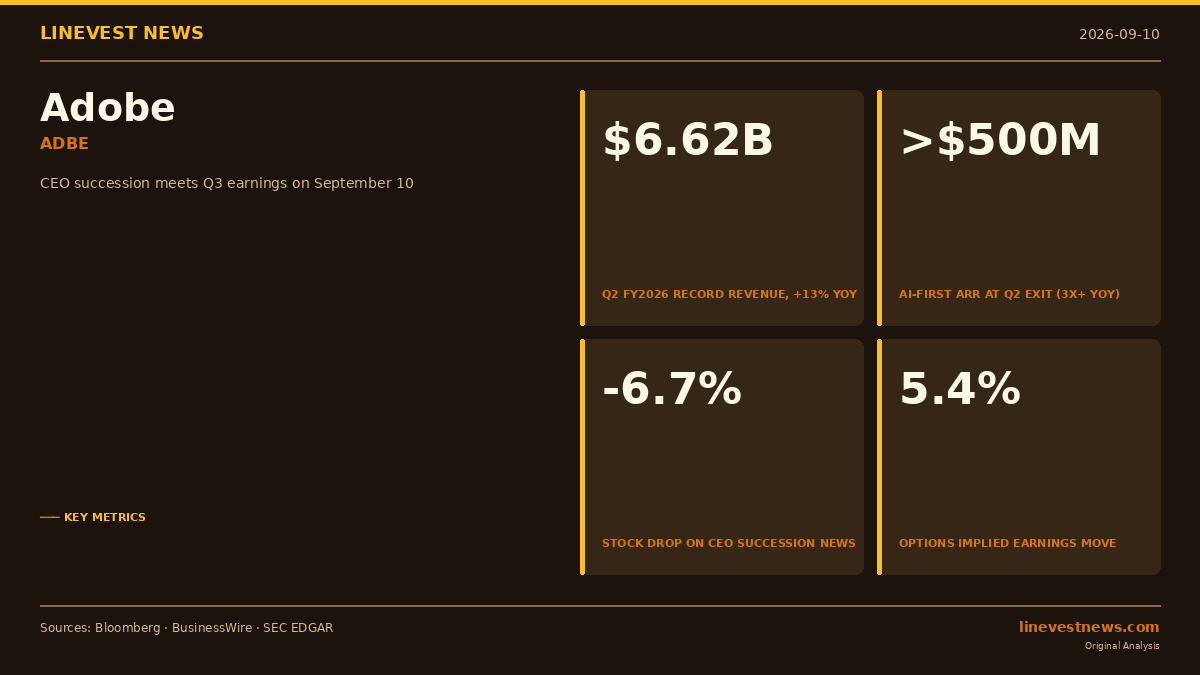
Adobe(ADBE)FY2026第三季財報預覽:執行長交接之際,三大觀察重點迎戰9月10日業績
Adobe將於9月10日公布FY2026第三季財報,距執行長接班消息甫出僅數日。三大投資人關注焦點:Firefly ARR、領導層交接,以及股價下跌6.7%。
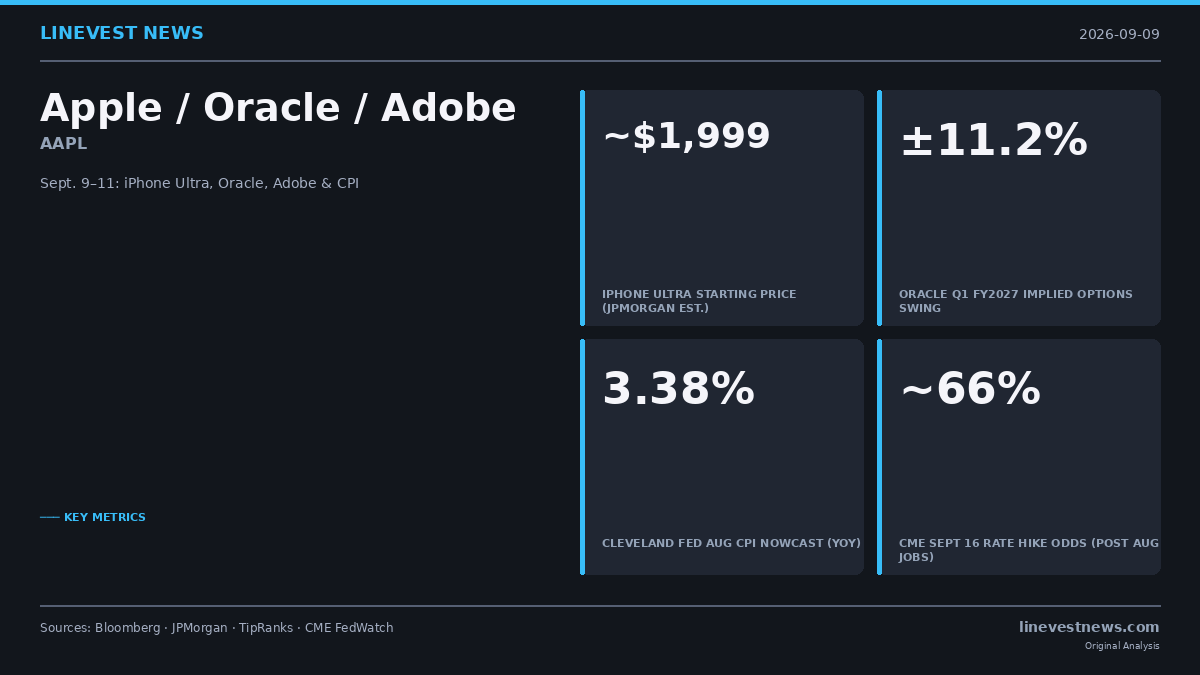
9月8–11日投資者操盤手冊:iPhone Ultra、甲骨文、Adobe,以及左右利率決策的CPI
iPhone Ultra、甲骨文雲端財報、Adobe執行長交接,以及週五CPI,四個交易日內齊聚,9月16日利率決策前景受矚。
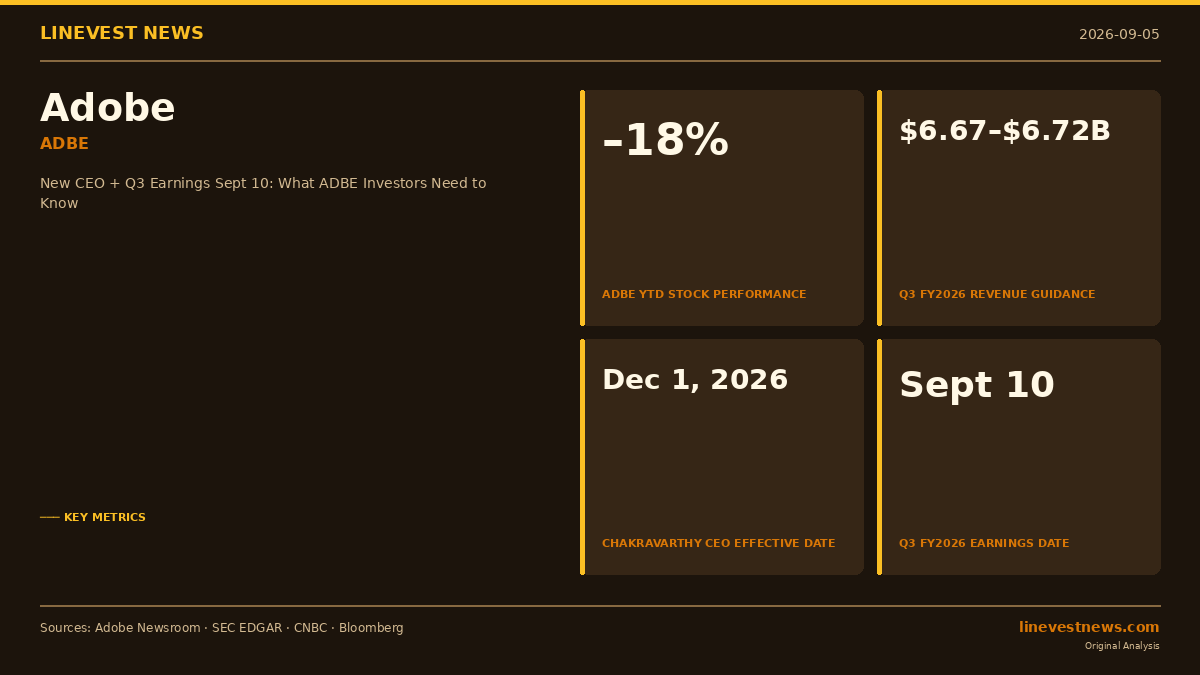
Adobe任命Chakravarthy為執行長,9月10日Q3財報前三大投資觀察點
Adobe任命Chakravarthy自12月1日起擔任執行長;ADBE年初至今下跌18%,Q3 FY2026財報將於9月10日公布。營收指引:$6.67–$6.72B。三大投資人觀察重點。
深入標題背後
您剛讀到發生了什麼。接下來,讀懂它意味著什麼。
每天早晨送上當日分析報告 — 免費
LineVest Daily在開盤前送達您的信箱:當日發布的企業分析報告 — 最新10-K與10-Q真正揭示的數字,以簡明英文呈現。免費,無需信用卡。
同樣的報告,換成您指定的公司
您剛讀到的Adobe分析就是範例。指定任何一家美國上市公司,我們以同樣方式為它分析 — 完整閱讀最新SEC披露、US GAAP財務、公司治理,以及對股價的意義。3小時內PDF送達您的信箱。
要為您閱讀哪一家公司?
$15 · 單次 · 3 小時內 PDF
請先選擇公司基於SEC原始披露的獨立新聞報導 — 非投資建議。與任何券商無關。